A ten-year-old at the kitchen table, one eye on the oven dial, asks, “How many germs does it take to catch something?” In 1954, Marjorie Bohnhoff, C. Phillip Miller and a colleague asked the same thing about mice. For some mice, the answer was fewer than three Salmonella, too few to cloud a drop of water.
They had fed mice Salmonella, the germ behind food poisoning, to find out. For healthy mice, it took about 100,000 germs to give 5 out of every 10 a gut infection. The mice that took fewer than three had been given one dose of an antibiotic, a drug that kills bacteria, the day before. The drug had killed many of the bacteria living in the mice’s guts, and those bacteria had been keeping the newcomers out. So the answer for the ten-year-old is: it depends on who already lives there.
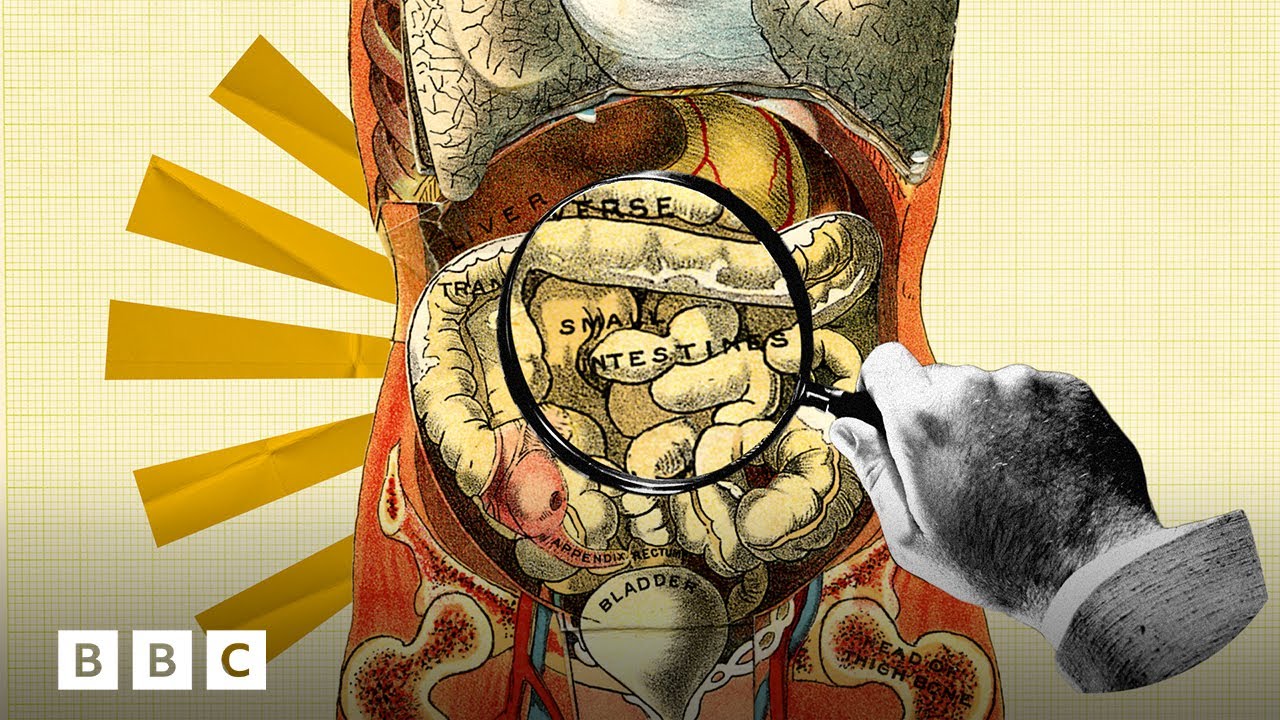
Figure 1. The gut’s trillions of microbes and what they do for health, from BBC Global’s Health Decoded (2024), with science journalist Melissa Hogenboom. Video and thumbnail: BBC, Standard YouTube License.
The skin has guards of its own. In 2010, Tadayuki Iwase and colleagues at Jikei University in Tokyo studied Staphylococcus aureus, a bacterium that causes skin and blood infections. They found strains of a common skin bacterium that make a protein breaking up the films S. aureus grows in. Of 88 volunteers, those who carried those strains in their noses rarely carried S. aureus. When the team put such a strain into the noses of volunteers who did, the S. aureus was gone. Bohnhoff took the guards away, and the door opened. Iwase added one, and it shut.
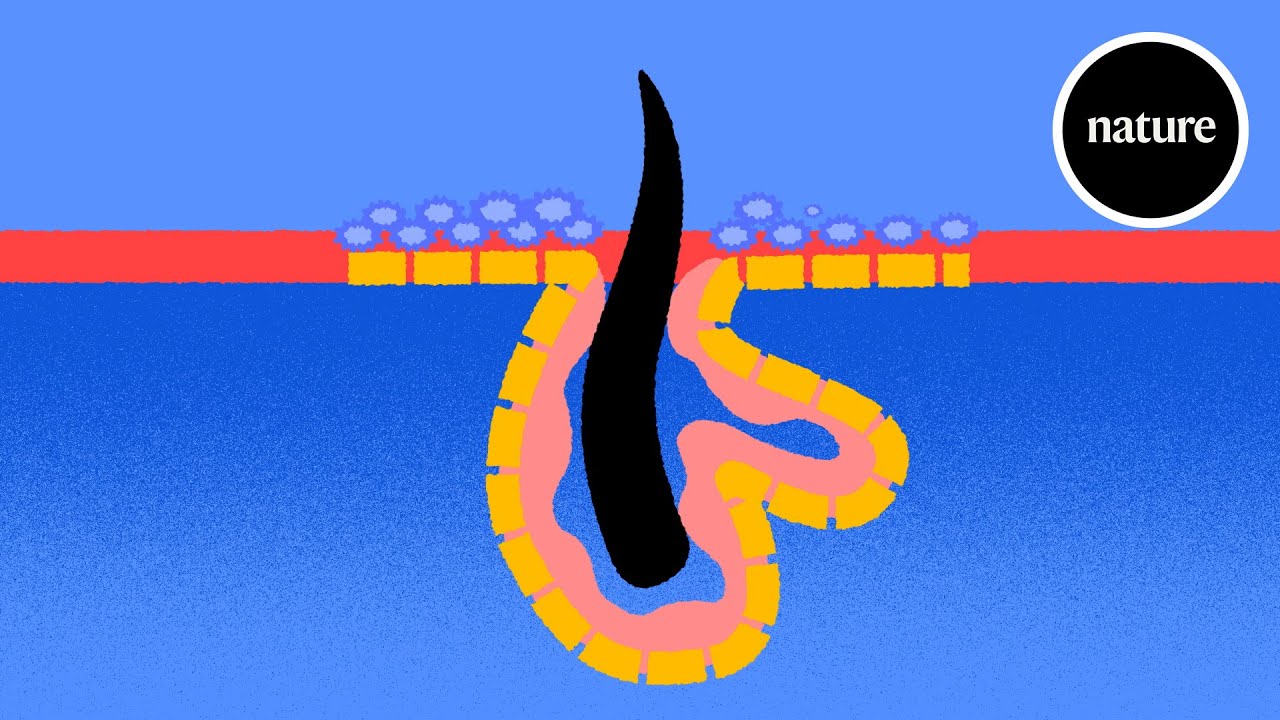
Figure 2. How the bacteria on skin make it a poor home for invaders, help hold the skin together and train the immune system, from Nature Video (2020). Video and thumbnail: Springer Nature, Standard YouTube License.
Say you stand at the pharmacy counter this month with a prescription for your child’s earache: an antibiotic, twice a day for ten days. The paper bag crinkles as the pharmacist folds it shut. Some ear infections get better without antibiotics, and you have not asked whether this is one. The drug cannot tell the germ it was sent for from the crowd in your child’s gut. One dose thinned that crowd in Bohnhoff’s mice enough to let three germs in. Ten days leave your child’s gut with fewer guards at its door until the crowd grows back.
Bohnhoff’s mice and Iwase’s volunteers show one idea from a 2024 review by Ziqi Ma and colleagues. The microbes defend the body, and they teach the immune system what to fight. The first part of this series followed four of the review’s ideas, on what the microbes are and where they live. The review names three more. The microbes and the body’s cells share one fluid, and each side changes it for the other. When the two sides stop holding each other in check, the body tips toward illness. And the microbes may help set the targets a body holds steady. Each is a loop between the two sides, the kind systems thinking follows.
A body holds some numbers steady, its temperature among them, the way an oven holds the heat it is set to. In a fever, the brain turns its own dial up by one or two degrees Celsius, the body shivers to catch up, and the target moves first.
Ma’s team argues that the microbes keep a second hand on the same dial. If ten days of pills can thin the guards in a child’s gut, how much of the turning were those guards doing?
What Keeps the Door Shut
In 1958, four years after Bohnhoff’s mice, surgeons in Denver ran the experiment in reverse. Ben Eiseman’s team gave four patients with a severe gut infection an enema of a healthy donor’s stool, and the response, they wrote, was “immediate and dramatic.” The idea waited half a century for a proper test.
The infection is now usually traced to Clostridioides difficile, a bacterium that multiplies when antibiotics clear out its rivals. It often comes back after each new course of the drug. In 2013, Els van Nood, Josbert Keller and colleagues in Amsterdam tested a donor’s stool against the standard antibiotic, vancomycin, in 42 patients whose infection kept returning. The stool was mixed with salt water and passed through a thin tube from the nose into the small intestine. Thirteen of the sixteen patients in the donor group were cured by the first infusion. On vancomycin alone, four of thirteen were. The gap was so wide that the trial was stopped early. It was a small trial, but a stranger’s microbes had taken the space back.
Resident microbes keep newcomers out in several ways. They eat the food a newcomer needs. Some make poisons aimed at rivals, like the protein Iwase’s nose strains made against S. aureus. Some change the place itself. In the vagina, Lactobacillus bacteria make lactic acid, which keeps the vagina too acidic for many germs that cause infections.
The microbes also teach. The Amish of Indiana and the Hutterites of South Dakota both came to America from Europe as German-speaking farmers, and their genes are close. They farm differently. Amish families keep dairy cows and work fields with horses, and the barns stand a few steps from the house. Hutterites live on large communal farms run with modern machines. In 2016, Michelle Stein, Carole Ober and colleagues compared the two. About 5 percent of Amish children had asthma, against 21 percent of Hutterite children. The dust in Amish homes held almost seven times as much endotoxin, a molecule from the outer coat of many bacteria.
The team then tested the dust. When they put Amish house dust into the airways of mice, it protected the mice from asthma attacks. Hutterite dust did not. In 60 children, 30 from each group, the Amish children’s immune cells were tuned differently, more toward fighting germs and less toward allergy. Two communities are not a trial. The mouse experiments are what point to the microbes in the dust.
Medicine already counts several ways to gain protection after birth. A body can fight off an infection and remember it. A vaccine can teach it. A baby can take antibodies from milk, and whether anything travels back the other way is the last part of this series. Ma’s team adds the microbes to that list and calls it acquired microbial immunity (Figure 3). It is gained by living among the right microbes, as the Amish children did, or by medicine, as the Amsterdam patients did. Ma’s review counts milk sugars among the ways it is gained, since they feed a baby’s gut bacteria at every meal. It can be lost to one dose of the wrong drug.
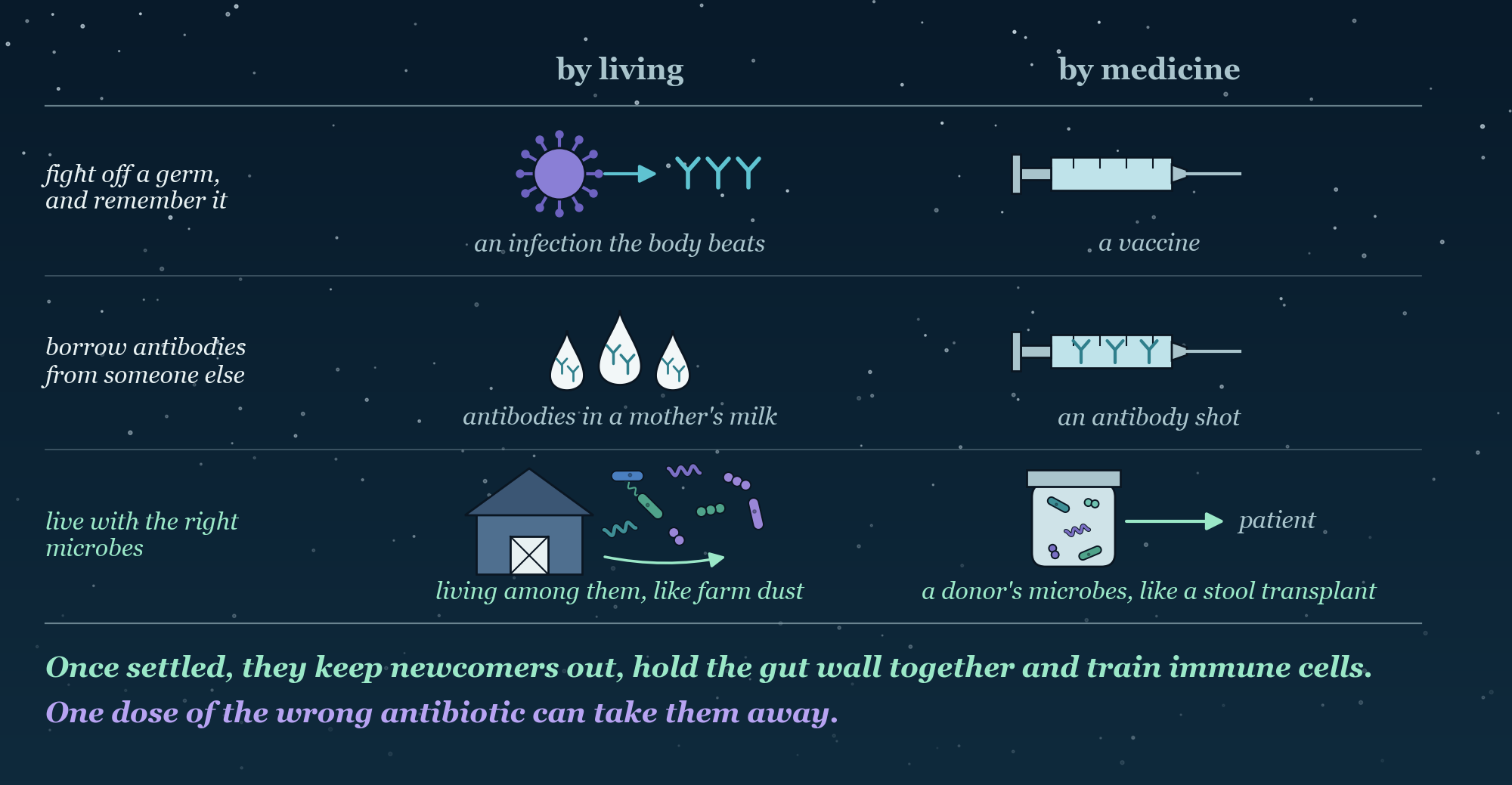
Figure 3. Ways to gain protection after birth, with Ma’s addition in the bottom row. Adapted from Ma et al. (2024), Fig. 2, CC BY 4.0; simplified and redrawn, leaving out milk sugars and probiotic products.
That loss has a place in an ordinary year: the pharmacy counter. Anyone handed an antibiotic for a cough, an earache or a sore throat can ask two questions before the first pill. Is this infection caused by bacteria? Antibiotics do nothing against a virus, and most colds are viral. Is there a narrower drug that leaves more of the gut alone? A friend with a toddler and a winter of earaches ahead may want the two questions too. When the first answer is yes, the drug is doing its job. Skipping the questions costs nothing that day. Any cost comes later, in a gut with fewer defenders, like the mice that three germs could infect. Ma’s team claims those microbes also help set the body’s targets, starting with its temperature.
Who Set Normal
In 1868, the German physician Carl Wunderlich published the temperatures of about 25,000 patients. He took them under the arm with a thermometer about a foot long, which needed more than fifteen minutes for each reading. He put normal at 37 °C.
In 2020, Myroslava Protsiv, Julie Parsonnet and colleagues at Stanford checked Wunderlich’s number against the records of about 189,000 people. The records ran from Civil War veterans, through a national health survey in the 1970s, to Stanford patients seen in 2017. Body temperature had fallen about 0.03 °C for every decade of birth. Men born in the early 1800s ran 0.59 °C warmer than men today. Like the fever, the target had moved. This move took two centuries, and the textbooks kept saying 37.
Mice raised without microbes run colder than mice with them. Kale Bongers, Robert Dickson and colleagues at the University of Michigan showed it in 2023, and mice whose gut bacteria were wiped out with antibiotics ran colder too. In 116 patients in hospital, the mix of gut bacteria on arrival predicted how each patient’s temperature would change. A link like that does not prove a cause.
A body holds its temperature with a balancing loop, a loop that pushes back whenever a reading drifts from its target. The fever’s shivering is that loop at work. Once the brain raises its set point, the temperature the body aims for, the body is for a while colder than its own new target. As on a cold night, it pulls blood away from the skin, and the hands go cold. The thermometer climbs while the person under the blanket feels freezing.
The physiologist Walter Cannon gave this steadiness its name, homeostasis. The loop does the holding. An oven answers to one hand. A body holds many targets at once. In Ma’s view, the microbes are a second hand choosing where the loop holds, a role the team calls homeostatic reprogramming.
Every range printed on a lab report assumes a target the loop is steering toward. The range beside each number comes from many other people. At the next checkup, a useful question is not only “Is this in range?” but “Is this where I usually am?” Last year’s report, held next to this year’s, answers it in a minute. A partner’s reports work the same way. Skip the comparison, and a number can drift for years inside the printed range before anyone looks.
My daughters have had no antibiotics so far. When my first daughter ran a fever at about 18 months, she would not touch her solid food and nursed mostly for comfort. The only medicine she got was acetaminophen. I took her temperature. It moved from 39.4 °C to 38.9 °C. The line the pediatrician’s office gave me was 38 °C, 100.4 °F: no higher. That line is the same for every child. It says nothing about where one child’s own normal sits.
If the microbes help choose where the loop holds, could thinner gut communities explain part of the drop since Wunderlich?
Ma’s team offers the idea as a hypothesis. Protsiv’s team pointed to fewer chronic infections. Both explanations run through microbes, and neither team tested the other’s.
The microbial ecologist Allan Konopka warns that biologists tend to expect a “balance of nature,” a steady state every system returns to. Anything else gets read as noise. A normal that drifts over two centuries is easy to miss. So is a normal that two sides hold at once, such as the low oxygen in the thin layer of fluid next to the gut wall.
Where the Oxygen Goes
Right next to the gut wall, there is almost no oxygen, and the body’s own cells keep it that way. The cells that line the colon run mostly on butyrate, the fatty acid from fiber that sealed a leaky brain barrier in part one. Its name comes from butter, and its acid gives rancid butter its sour smell.
Burning butyrate takes oxygen, and the cells take that oxygen from the edge of the gut. That suits the bacteria that make butyrate, because most of them cannot live where there is oxygen. The layer by the wall works like a shared room. The bacteria feed the cells, and the cells keep the room low on oxygen. The room runs on a reinforcing loop: each side keeps the other going.
In 2017, Mariana Byndloss, Andreas Bäumler and colleagues at the University of California, Davis, broke the loop with antibiotics in mice. The drugs killed the butyrate makers. Without butyrate, the colon cells switched to burning sugar, which uses less oxygen, and more oxygen reached the gut. E. coli and Salmonella can breathe that oxygen, and they multiplied. Ma’s team calls this shared life cell-microbe co-ecology. When one side shifts, the room shifts, and the room decides who can live in it.
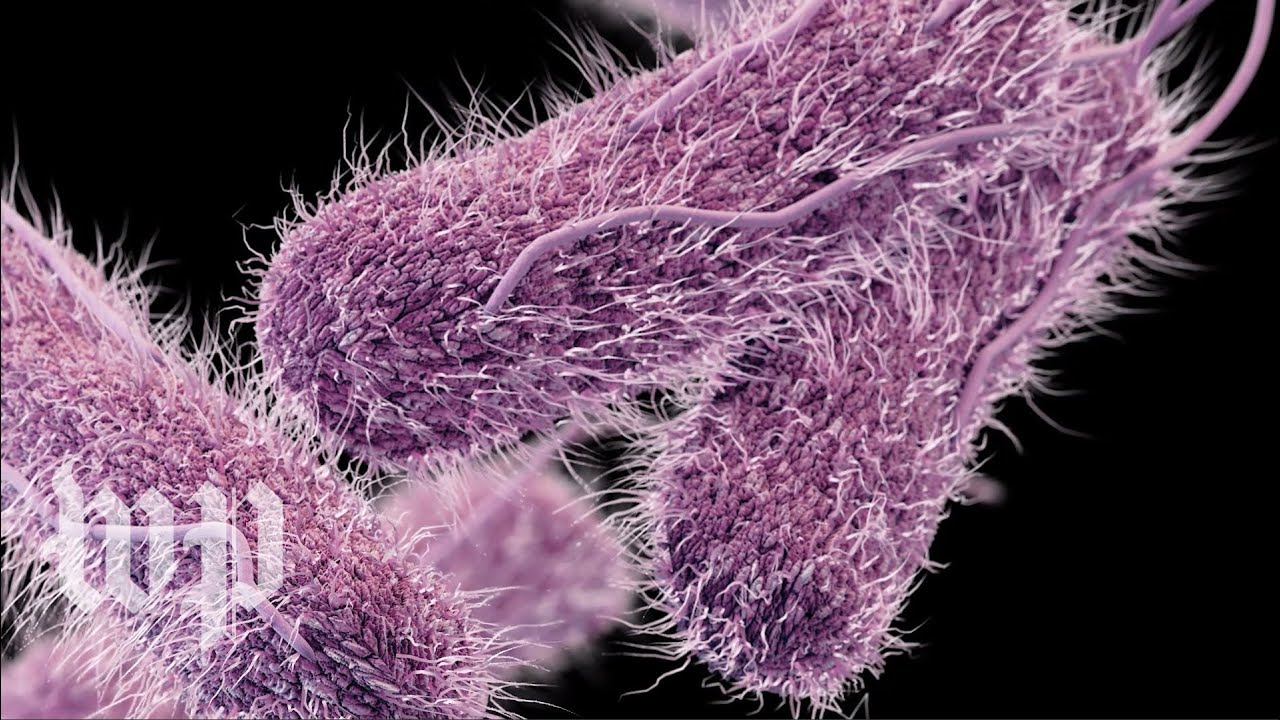
Figure 4. Salmonella, one of the germs that move in when oxygen reaches the gut, from The Washington Post (2018). Video and thumbnail: The Washington Post, Standard YouTube License.
The Davis work was done in mice, but an antibiotic course in a person can thin the butyrate makers too. Loose stools in the days after the pills are one sign the room has shifted. A short message to the doctor or pharmacist can ask how long that should last and when to call. In the month after an antibiotic, a person is up to 10 times more likely to catch C. difficile, the germ from the Amsterdam trial. Age over 65 and a stay in a hospital or nursing home raise the risk again, so a grandparent in care has the most to ask about. For them, C. difficile can be life-threatening. The room shifts with every meal, too.
How Health Tips
A meal of eggs carries choline, a nutrient in the yolk. Some gut bacteria turn choline into a gas that smells like fish, and the liver turns that gas into TMAO. In 2016, Weifei Zhu, Stanley Hazen and colleagues at the Cleveland Clinic followed more than 4,000 heart patients. Patients in the top quarter for TMAO had 1.64 times the risk of a heart attack or stroke.
The comparison is with the bottom quarter over three years, after allowing for other risk factors. In the lab, TMAO made platelets, the blood cells that start a clot, quicker to react. The study measured TMAO in the blood and did not track diet, so it does not by itself make a case against eggs. A bowl of oats or beans carries fiber the body cannot digest, and that fiber ends as butyrate for the colon wall. One gut can run both routes at once. Which one wins depends on the meal and on which bacteria are there to meet it.
Ma’s team puts the last idea of the framework into one model of health and illness. The body needs four things from its microbes, and each can fail (Figure 5). It needs enough contact with microbes, kept in check. Too little, at the extreme, is what Ma’s team calls germ-free syndrome: the faults of animals raised with no microbes at all. Too much is overgrowth, such as bacteria spreading up into the small intestine, where they cause bloating and pain. It needs a gut wall that holds, so that bacteria and their parts stay out of the blood. It needs more helpful products than harmful ones, butyrate on one side and TMAO on the other. And it needs steady control as the microbes change, because bacteria mutate.
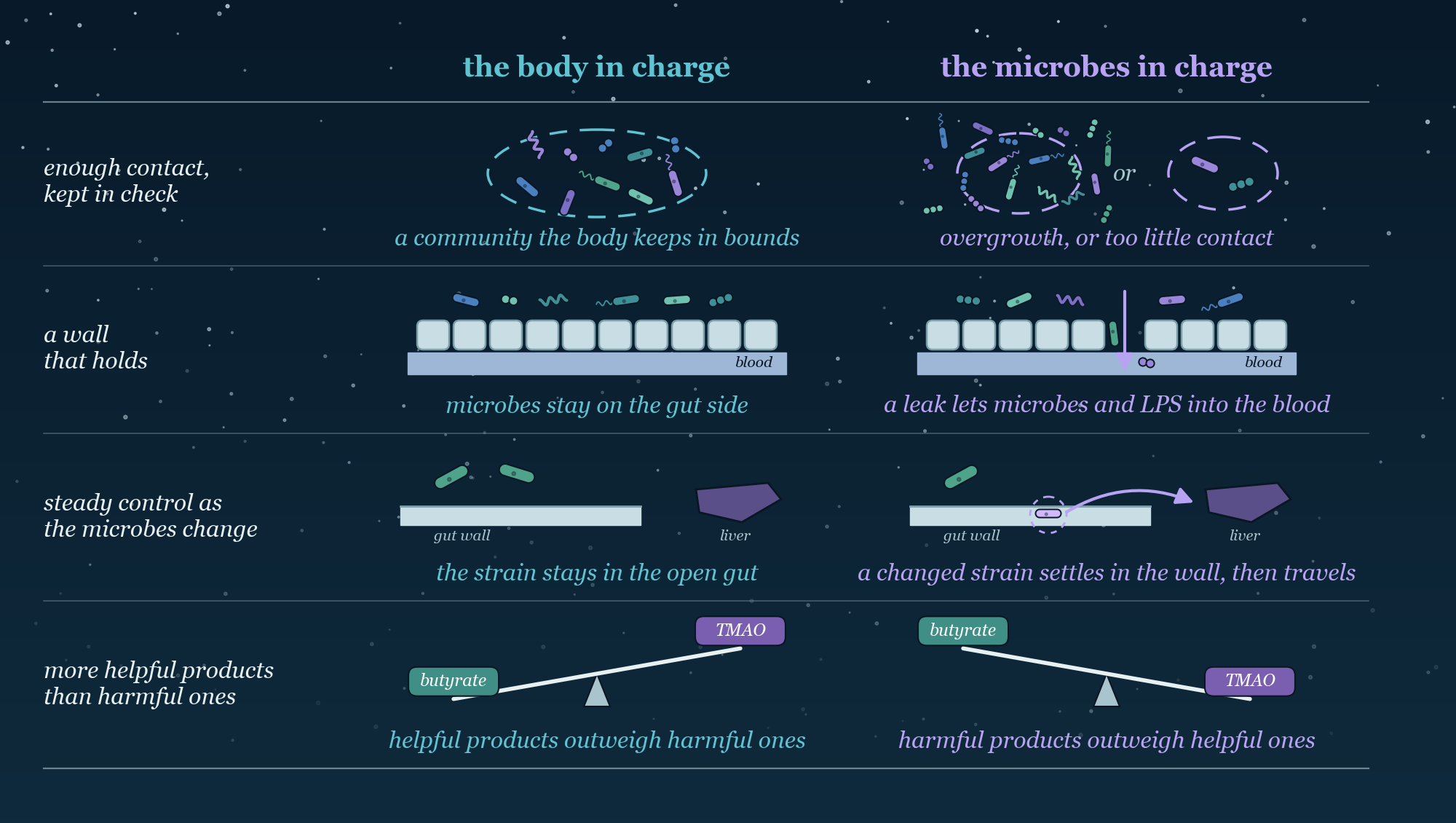
Figure 5. Four things the body needs from its microbes, and how each one fails. Adapted from Ma et al. (2024), Fig. 7, CC BY 4.0; simplified and redrawn.
In 2022, Yi Yang, Noah Palm and colleagues at Yale put one strain of Enterococcus gallinarum, a gut bacterium, into eight germ-free mice. After three months, it had picked up 159 new mutations and split into two lines. One kept to the open gut. The other adapted to the gut lining, slipped past the immune system, and spread to the lymph nodes and the liver. There it caused more inflammation. Ma’s team rules out any simple list of good and bad bacteria. “In a rigorous sense, all human microbes exhibit conditional pathogenicity,” they write. Any of them can cause harm under the right conditions. What a microbe does depends on what it is connected to.
When all four needs hold, the body stays in charge, and the microbes’ hand on the dial helps it. When they fail, the microbes take over, and the body drifts toward illness. The model leaves open which side pushed first.
In an ordinary week, an antibiotic course thins the contact. A week of white bread and no beans leaves the butyrate makers hungry, and the wall’s cells with them. The question at the next grocery run is which meals feed the bacteria that feed the wall. The snack within reach right now has a fiber line on its label. The same pot feeds everyone at the table. Skip the question, and nothing changes this week. The butyrate makers just stay hungry. A pot of lentils simmering on a weeknight stove feeds the table and the bacteria that feed the wall.
A Closing Invitation. Three germs could infect Bohnhoff’s mice because the door their microbes held had been opened. Their hand is on the body’s dial too: helping set a temperature, and deciding which way a meal runs.
- Find your own normal. Tomorrow morning, before coffee, start a sticky note inside the medicine cabinet door with your temperature and a partner’s or child’s. The cool tip goes under the tongue, then the beep. Is it 37, or lower, like most people’s now? The next fever gets read against that note.
- Write down the before. The next time an antibiotic comes home, for you or a child, write one line on the first day: how the stomach feels, which meals sit well. Two weeks after the last dose, does the gut feel the way that line says? If not, which of those meals carry fiber for the gut bacteria that feed the gut wall?
- Ask what number means call. This month, at a checkup or in a message to the doctor’s office, ask which temperature means call, with the sticky note beside you. If your normal runs below 37, does the line move with it? Then the next shivering night can be what it is: a body chasing a target it moved.
The label on the pharmacy bag names one germ and ten days of pills. It does not name the crowd those pills will thin, or the dial that crowd was helping hold.
Where This Came From
Ma’s homeostatic reprogramming builds on Claude Bernard, who wrote in the 1800s of the milieu intérieur, the inner fluid a body keeps steady around its cells. Ma’s team adds the microbes as a fourth force beside the nervous, immune and metabolic systems, and asks whether “steady” was ever the right word.
Intellectual Honesty Note. The ten-year-old in the opening and the pharmacy counter scene are hypotheticals. My first daughter’s fever and the 38 °C line are my own. The fall in average body temperature is read here as a lower target; Protsiv’s team measured temperatures, not set points. Ma et al. (2024) is a narrative review, and its ideas are proposals, not settled findings. Ma’s review gives cell-microbe co-ecology no section of its own; it gets one here. The hand on the dial and the oven are devices: a body’s set points are held by loops of nerves, hormones and cells, not turned by a hand. Bohnhoff’s team used a Salmonella strain resistant to streptomycin; Ma dates the study 1967, and the 1954 paper is the original. Bongers’ results are reported from the abstract.
References
Bohnhoff, M., Drake, B. L., & Miller, C. P. (1954). Effect of streptomycin on susceptibility of intestinal tract to experimental Salmonella infection. Proceedings of the Society for Experimental Biology and Medicine, 86(1), 132–137.
Bongers, K. S., Chanderraj, R., Woods, R. J., McDonald, R. A., Adame, M. D., Falkowski, N. R., Brown, C. A., Baker, J. M., Winner, K. M., Fergle, D. J., Hinkle, K. J., Standke, A. K., Vendrov, K. C., Young, V. B., Stringer, K. A., Sjoding, M. W., & Dickson, R. P. (2023). The gut microbiome modulates body temperature both in sepsis and health. American Journal of Respiratory and Critical Care Medicine, 207(8), 1030–1041.
Bryce, E. (2018, January 8). How does your immune system work? [Video]. TED-Ed. YouTube. https://www.youtube.com/watch?v=PSRJfaAYkW4
Byndloss, M. X., Olsan, E. E., Rivera-Chávez, F., Tiffany, C. R., Cevallos, S. A., Lokken, K. L., Torres, T. P., Byndloss, A. J., Faber, F., Gao, Y., Litvak, Y., Lopez, C. A., Xu, G., Napoli, E., Giulivi, C., Tsolis, R. M., Revzin, A., Lebrilla, C. B., & Bäumler, A. J. (2017). Microbiota-activated PPAR-γ signaling inhibits dysbiotic Enterobacteriaceae expansion. Science, 357(6351), 570–575.
Cannon, W. B. (1929). Organization for physiological homeostasis. Physiological Reviews, 9(3), 399–431.
Centers for Disease Control and Prevention. (2025). Healthy habits: Antibiotic do’s and don’ts. https://www.cdc.gov/antibiotic-use/about/index.html
Centers for Disease Control and Prevention. (2026). About C. diff. https://www.cdc.gov/c-diff/about/index.html
Eiseman, B., Silen, W., Bascom, G. S., & Kauvar, A. J. (1958). Fecal enema as an adjunct in the treatment of pseudomembranous enterocolitis. Surgery, 44(5), 854–859.
Hogenboom, M. (2024, October 8). How your gut microbes shape your health [Video]. BBC Global. YouTube. https://www.youtube.com/watch?v=aEhrcIZE1ZM
Iwase, T., Uehara, Y., Shinji, H., Tajima, A., Seo, H., Takada, K., Agata, T., & Mizunoe, Y. (2010). Staphylococcus epidermidis Esp inhibits Staphylococcus aureus biofilm formation and nasal colonization. Nature, 465(7296), 346–349. https://doi.org/10.1038/nature09074
Konopka, A. (2026, May 6). Systems thinking [Substack post]. https://thinkmicrobe.substack.com/p/systems-thinking
Ma, Z., Zuo, T., Frey, N., & Rangrez, A. Y. (2024). A systematic framework for understanding the microbiome in human health and disease: From basic principles to clinical translation. Signal Transduction and Targeted Therapy, 9, 237. https://doi.org/10.1038/s41392-024-01946-6
Nature Video. (2020, December 16). The skin microbiome: A healthy bacterial balance [Video]. YouTube. https://www.youtube.com/watch?v=MWE3U3FItlc
Protsiv, M., Ley, C., Lankester, J., Hastie, T., & Parsonnet, J. (2020). Decreasing human body temperature in the United States since the Industrial Revolution. eLife, 9, e49555.
Stein, M. M., Hrusch, C. L., Gozdz, J., Igartua, C., Pivniouk, V., Murray, S. E., Ledford, J. G., Marques dos Santos, M., Anderson, R. L., Metwali, N., Neilson, J. W., Maier, R. M., Gilbert, J. A., Holbreich, M., Thorne, P. S., Martinez, F. D., von Mutius, E., Vercelli, D., Ober, C., & Sperling, A. I. (2016). Innate immunity and asthma risk in Amish and Hutterite farm children. New England Journal of Medicine, 375(5), 411–421.
van Nood, E., Vrieze, A., Nieuwdorp, M., Fuentes, S., Zoetendal, E. G., de Vos, W. M., Visser, C. E., Kuijper, E. J., Bartelsman, J. F., Tijssen, J. G., Speelman, P., Dijkgraaf, M. G., & Keller, J. J. (2013). Duodenal infusion of donor feces for recurrent Clostridium difficile. New England Journal of Medicine, 368(5), 407–415.
Walter, E. J., Hanna-Jumma, S., Carraretto, M., & Forni, L. (2016). The pathophysiological basis and consequences of fever. Critical Care, 20, 200. https://doi.org/10.1186/s13054-016-1375-5
The Washington Post. (2018, August 30). What is salmonella? [Video]. YouTube. https://www.youtube.com/watch?v=WTlFIwQePkg
Wunderlich, C. A. (1868). Das Verhalten der Eigenwärme in Krankheiten. Otto Wigand.
Yang, Y., Nguyen, M., Khetrapal, V., Sonnert, N. D., Martin, A. L., Chen, H., Kriegel, M. A., & Palm, N. W. (2022). Within-host evolution of a gut pathobiont facilitates liver translocation. Nature, 607(7919), 563–570.
Zhu, W., Gregory, J. C., Org, E., Buffa, J. A., Gupta, N., Wang, Z., Li, L., Fu, X., Wu, Y., Mehrabian, M., Sartor, R. B., McIntyre, T. M., Silverstein, R. L., Tang, W. H. W., DiDonato, J. A., Brown, J. M., Lusis, A. J., & Hazen, S. L. (2016). Gut microbial metabolite TMAO enhances platelet hyperreactivity and thrombosis risk. Cell, 165(1), 111–124.