In Calabria, an old woman’s pot fills with hot pasta when she sings to it. She is Strega Nona, “Grandma Witch.” Big Anthony, who sweeps her house and milks her goat, must never touch the pot. One night he peeks in her window while she sings it full. She sings a second verse to make it stop, then blows three kisses. Big Anthony learns the song, a perfect copy. He never sees the kisses.
When Strega Nona goes over the mountain to visit her friend Strega Amelia, Big Anthony sings to the pot and feeds the whole town. Then he sings the verse that stops it. Without the three kisses, the verse does no good. Pasta pours out of the windows and doors and down the road, until it nearly buries the town. Strega Nona comes home, blows three kisses, and the pot goes still (Figure 1). Then she hands Big Anthony a fork. “So start eating.”
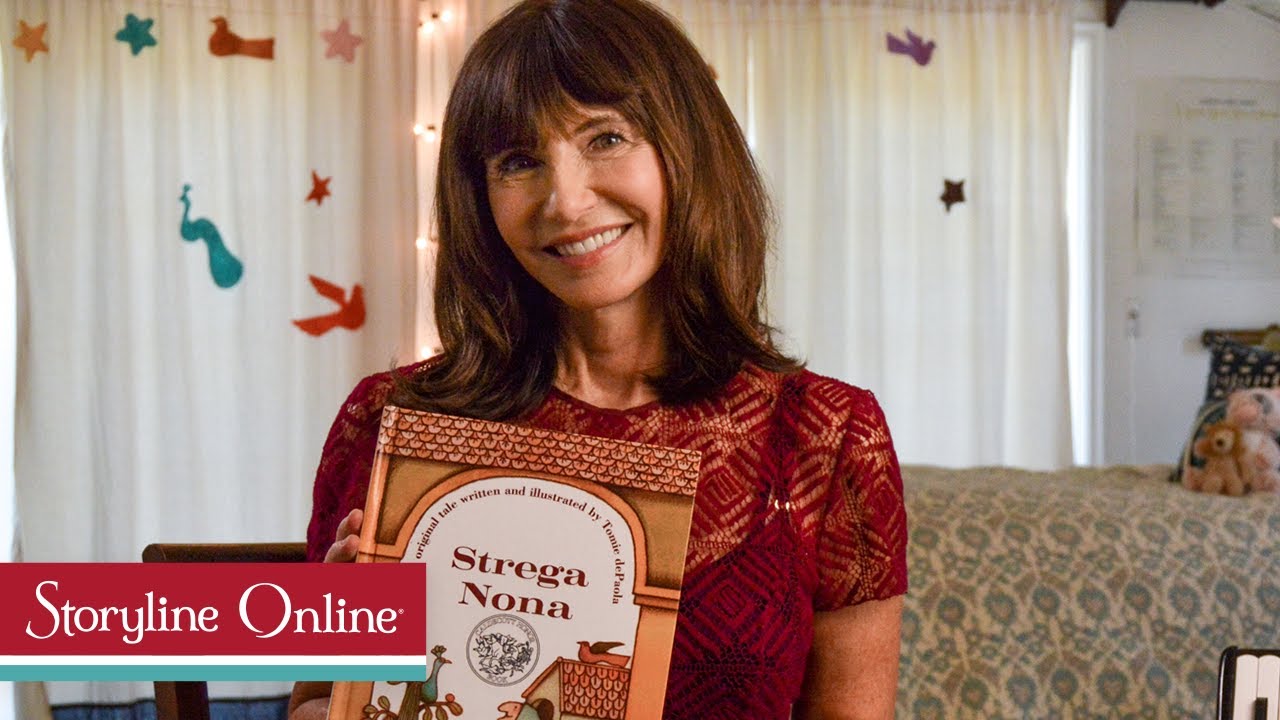
Figure 1. Strega Nona read aloud by Mary Steenburgen, with Tomie dePaola’s pictures (Storyline Online, SAG-AFTRA Foundation, 2016). YouTube embed.
In Tomie dePaola’s 1975 picture book, the pot stops only because Strega Nona comes home.
A cell cannot wait for anyone to come home. It copies its recipes out all day, and copies that never stopped would bury it the way the pasta buried the town. Every copy it makes is built to be taken apart, and the cell’s enzymes take it apart after it has been read.
A cell’s copy works like a recipe card. A cook copies one recipe onto a card, takes the card to the counter and cooks from it. A splash of sauce later, the card goes in the bin, and the cookbook on the shelf was never touched.
A previous essay called the genes a cookbook. The recipes a cell has copied out to the counter make up a layer of their own.
“The pattern of gene expression at the level of genetic transcription in a specific organism or under specific circumstances in specific cells.”
The cards are where a common worry lives, at dinner tables and pharmacy counters. Your mother calls the night before her COVID shot, and her voice on the speaker is tight: “Can the mRNA change my DNA?” You know the shot hands her cells a recipe. You cannot tell her what stops that copy, and she moves the appointment back a month.
mRNA, short for messenger RNA, is the real name for a card (Figure 2). The answer to her question is in how a card is made and thrown away. So is the reason HIV stays in a body for life: it brings what a vaccine’s card lacks, a way to write its card into the book.
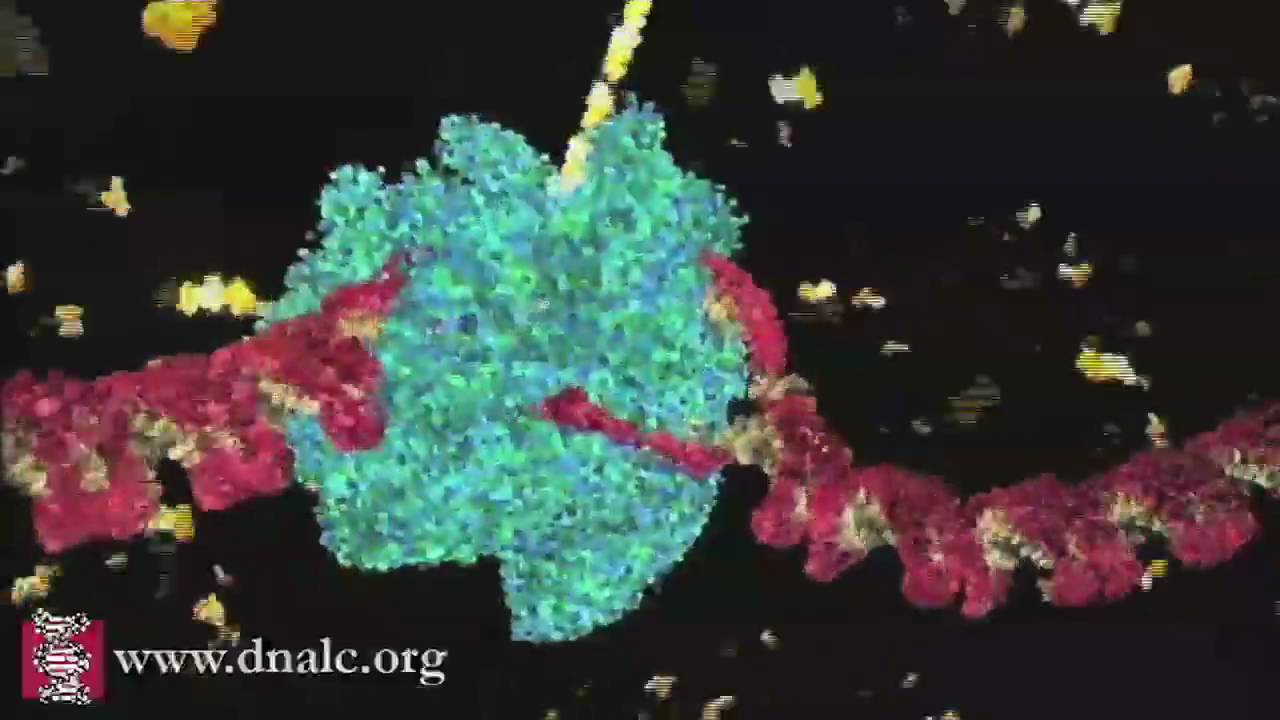
Figure 2. From DNA to RNA in molecular models: the copying machine opens the double helix and spins out one strand of RNA. DNA Learning Center, Cold Spring Harbor Laboratory. YouTube embed.
What the Copy Carries
On a football field in an imagined film, every letter of DNA is a sprite holding a bead. Two strands of sprites twist into a double line, and an imp with a twitching nose walks it, fixing wrong pairs. A second imp waits at the sideline and never fixes anything. This one goes by Quill, a courier built for reading. Quill carries an empty thread, waiting for something worth copying onto it.
Somewhere inside the double line is the wing-shimmer verse: a stretch of letters that holds the recipe for the shimmer on a wing. Just before the verse begins, a few dozen beads form a pattern unlike anything nearby. This pattern is a flag. It marks where reading starts and carries no recipe of its own.
Narrator: A verse like this one has a real name: a gene, a stretch of DNA that gets read. Most DNA codes for no protein at all. The genes in this story are read and built into proteins, working parts of the body, like the enzyme that lets a body digest the milk in a morning coffee. The flag is real too. A short marker just before each gene, called a promoter, tells the reading machinery where to start. Whether a courier ever reaches that flag is decided elsewhere, by caps that put a verse to sleep.
Quill flies straight for the flag. It slips in between the two strands and pries the partners apart, one pair at a time, like unzipping a jacket. Unlike a jacket’s, this zip closes again right behind Quill, so only a few pairs are ever open at once.
“The process of making an RNA copy of a gene’s DNA sequence. This copy, called messenger RNA (mRNA), carries the gene’s protein information encoded in DNA.”
Quill reads down one open strand, letter by letter, and threads a new strand as it goes. An A on the open strand pulls in a paler, imp-only bead standing in for T. A T pulls in an A, a C pulls in a G, and a G pulls in a C. If the sprites hold A-T-C-G, Quill writes U-A-G-C, with U for its pale bead. At the end of the verse, Quill snaps free, and the two strands fall back together, sealed. The verse is the recipe. Quill’s thread is the card, and the book never left the shelf (Figure 3).
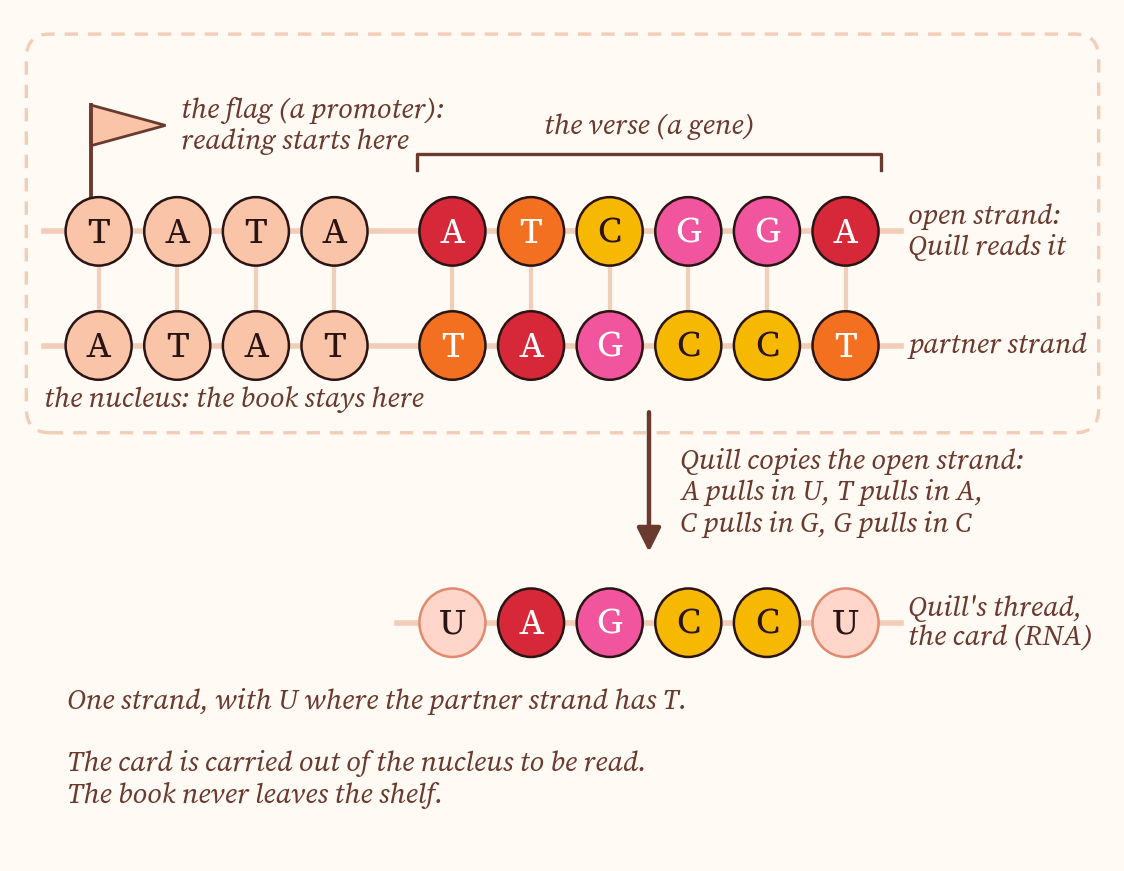
Figure 3. From gene to card. Quill reads the open strand past the flag and writes one new strand, with U where the partner strand has T. The verse’s letters are invented; the pairing rules are real. The peach flag letters, TATA, come from a real promoter piece, the TATA box. Drawn for this piece.
Narrator: RNA uses a related letter, uracil (U), wherever DNA would use T. The book stays in the nucleus, a walled room in the middle of the cell. The card is carried out of it to be read. A cell’s own cards are short-lived: in mouse cells, half of a typical card is gone in about nine hours.
But Quill’s card is not ready to cook from yet.
What the Copy Leaves Out
Quill writes down every letter of the verse, and its first card comes out too long. An old family cookbook has chatty paragraphs between the steps: a story about the aunt who wrote it, a note on where to buy the cheese. A cook copying the recipe leaves the chatter off. Quill’s first copy keeps the chatter. Before the card leaves the room, a crew of cutters snips out the chatty stretches and joins the steps end to end.
Narrator: The steps are exons, the chatty stretches are introns, and the cutting is splicing. A cell can also keep or drop a step, so one gene can make more than one protein.
One smudge on the page can make the cutters drop a step that matters. Spinal muscular atrophy (SMA) is a disease that kills the nerve cells that move the muscles. In its worst form, babies lose the strength to breathe. Those nerve cells need a protein called SMN, and its recipe is in the book twice, SMN1 and a spare, SMN2. A child with SMA has no working copy of SMN1. The spare differs from SMN1 in a handful of letters, and one of them, in exon 7, is the one that matters. That letter does not change the protein, but it makes the cutters skip exon 7 on most cards.
In 2006, a lab found a short stretch just past exon 7 that tells the cutters to skip it. Nusinersen is a made-to-order strand of letters that sticks over that stretch, so exon 7 stays on the card. In the trial that led to its approval, 37 of 73 treated infants reached new movement milestones, such as holding up their heads or sitting. None of the 37 given a sham procedure instead did. On December 23, 2016, nusinersen became the first drug approved for SMA. Infants who had been sick for a shorter time were more likely to benefit.
A New York City pilot added SMA to the newborn blood-spot screen and found one baby in 3,826. She was first treated at 15 days old, and at a year she was meeting all her milestones. Each state decides which conditions its newborn screen covers, so the question for a family is whether SMA is on that list, in time for nusinersen.
What Breaks the Copy Down
Nusinersen patches a card the cell wrote. An mRNA vaccine goes further: it is a whole card, written in a lab and handed to the cell in a shot. Its recipe is for one harmless piece of a virus: for COVID-19, the spike protein. The card comes wrapped in a tiny bubble of fat that slips into cells near the shot. The cell cooks from it and makes the piece, which the immune system learns to recognize.
A card like that took decades to make work. Cells treat loose RNA from outside as a sign of a virus. So a card made in a lab set off the body’s alarms, and little protein got made. In 2005, Katalin Karikó and Drew Weissman found the fix. They swapped Quill’s pale U bead for a slightly altered one, of a kind the cell’s own RNA already carries, and the alarms stayed quiet. Their altered cards also made more protein. The work won them the 2023 Nobel Prize in Physiology or Medicine (Figure 4).

Figure 4. Katalin Karikó and Drew Weissman tell the story behind the mRNA vaccines (Penn Medicine, 2023). YouTube embed.
The vaccine’s card is never carried into the room where the book is kept. It brings no pen that writes RNA letters back into DNA letters, and no glue to paste a page in. After the protein piece is made, the cell breaks the card down. No room, no pen, no glue: that is the answer for a parent on the phone the night before a shot. The same answer holds for anyone who gets an mRNA shot every fall.
Narrator: The CDC says these vaccines “do not enter the nucleus” and “do not affect or interact with our DNA.” The pen and the glue are real enzymes, reverse transcriptase and integrase.
Narrator: A card from a vaccine does not vanish in an hour. In 2022, a team at Stanford looked inside lymph nodes, the immune system’s meeting places, of people who had had the shot. In some, they found vaccine mRNA up to eight weeks later. A card that lasts that long has more time to teach, and in the end it is broken down like the rest.
The immune system keeps the lesson after the card is gone. What it remembers is the protein piece, the dish, and not the card it was cooked from. A virus that wants to stay has to do what the vaccine’s card cannot.
What Pastes the Copy In
HIV carries its recipes on cards, and it brings the pen and the glue with it. HIV infects a kind of immune cell called a CD4 cell. Inside, its reverse transcriptase reads the card and writes it out again as a page in DNA letters. Its integrase carries that page into the nucleus, cuts the cell’s book open and glues the page in (Figure 5). From then on, the cell’s own couriers copy the virus’s recipes along with the cell’s.
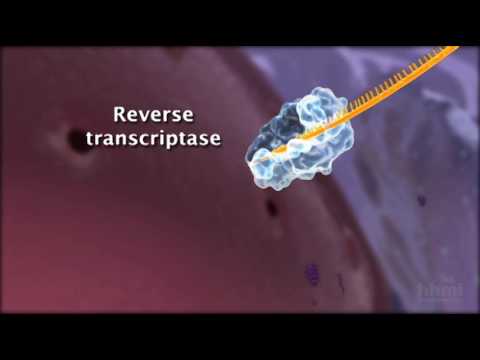
Figure 5. HIV’s life cycle, animated: reverse transcriptase writes the card out in DNA letters, and integrase glues the new page into the cell’s DNA. HHMI BioInteractive. YouTube embed.
The glued page is why HIV stays. Some infected cells go to rest with the page inside them, copying nothing. Medicine can stop the virus from copying, but no medicine yet reaches a page in a closed book. In 1997, a team at Johns Hopkins studied 22 patients on treatment. The drugs had kept the virus down in them for up to 30 months. From their resting cells, the team recovered virus that could still copy itself. Those resting cells are why HIV treatment lasts a lifetime.
The pen was once thought impossible. Textbooks drew the flow of a cell’s information as one-way arrows: DNA to RNA to protein. In 1970, Howard Temin and Satoshi Mizutani found an enzyme that writes RNA back into DNA, and David Baltimore found it separately. They found it in viruses that cause cancer in chickens and mice. A news story in Nature called the finding “Central dogma reversed.” Later in 1970, Francis Crick, who had named the central dogma in 1958, answered in the same journal. RNA to DNA was one of his “special transfers,” rare but allowed. “I have never suggested that it cannot occur,” he wrote. What his rule forbids is information getting back out of protein. HIV bends the one-way picture in the textbooks, not Crick’s rule.
Narrator: PrEP, short for pre-exposure prophylaxis, takes the tools away before the virus arrives. The daily pill first approved for it, in July 2012, jams reverse transcriptase, so the card is never written in DNA letters. A shot every two months, approved in December 2021, blocks integrase: the glue. A shot twice a year, approved in June 2025, jams the protein shell the virus travels in. Taken as prescribed, PrEP lowers the risk of getting HIV from sex by about 99 percent, and from injecting drugs by at least 74 percent. Of 100 people who would have caught HIV from sex, about one still would. Every form starts with a negative HIV test.
Narrator: The CDC advises everyone from 13 to 64 to be tested at least once, and one question at a checkup can check: has this person ever been tested?
Whichever book or virus a card came from, its next stop is the builders, who cook from it. A vaccine’s card then goes in the bin. Unless PrEP stops the virus first, HIV’s card ends as a page glued into the book.
A Closing Invitation. The pot ran over because Big Anthony could start a copy and not stop it. A cell’s cards are made to be thrown away, and the one card that stays has to bring its own glue.
- Settle the dinner worry. Think of the last time mRNA vaccines came up, at a pharmacy counter or across a dinner table, and kept someone up worrying that night. Picture Quill’s card: read, broken down, never written into the double line. Which worry is left for the next time, once the gene worry is gone?
- Check for a glued page. Tonight, scroll the lab results in the patient portal on your phone for an HIV test. If you find none, or have no portal, what would make your next checkup the visit you ask?
- Ask which steps were checked. When a baby is coming in your family or a friend’s, ask the hospital which conditions the newborn blood-spot test, the heel prick, covers, and whether SMA, the muscle disease, is one. Found at birth, it can be treated within weeks. Which grandparent-to-be in your circle would want to know before the baby comes?
Strega Nona never needed a bigger pot. Ask in time, and you are the one who stops the pot. Every card a cell writes carries its own three kisses.
Your cells copy each recipe, cook from the copy and throw it away. That lets a body change what it makes within hours, and your DNA stays untouched. A virus that pastes its copy in can stay for life.
Where This Came From
The cutting step was found in 1977 by two teams, led by Phillip Sharp at MIT and Richard Roberts at Cold Spring Harbor Laboratory. Both saw that a virus’s mRNA was stitched together from pieces lying far apart in its DNA. They shared the 1993 Nobel Prize in Physiology or Medicine. Temin and Baltimore shared the 1975 prize with Renato Dulbecco for the work on tumor viruses that found the pen.
Intellectual Honesty Note. The sprites, Quill, the cutters, the football field and the recipe cards are invented staging. Real transcription is done by an enzyme, RNA polymerase, and splicing by a large machine called the spliceosome. Quill’s first copy is called pre-mRNA. The nine hours is a median from one study in mouse cells; human cards vary widely. Human cells make a little reverse transcriptase of their own, from repeated stretches of DNA called LINE-1 that make up about 17 percent of the genome; the vaccine brings none. The PrEP drugs are tenofovir with emtricitabine (pills), cabotegravir (every two months) and lenacapavir (twice a year). The shots are approved for HIV risk from sex, so the 74 percent figure for injecting drugs is for pills. The one in 100 is this piece’s own arithmetic from the 99 percent.
References
Anonymous. (1970). Central dogma reversed. Nature, 226(5252), 1198–1199.
Baltimore, D. (1970). RNA-dependent DNA polymerase in virions of RNA tumour viruses. Nature, 226(5252), 1209–1211.
Berget, S. M., Moore, C., & Sharp, P. A. (1977). Spliced segments at the 5′ terminus of adenovirus 2 late mRNA. Proceedings of the National Academy of Sciences, 74(8), 3171–3175.
Centers for Disease Control and Prevention. (2024, September 3). How COVID-19 vaccines work. Retrieved October 17, 2026, from https://www.cdc.gov/covid/vaccines/how-they-work.html
Centers for Disease Control and Prevention. (2026, September 15). Getting tested for HIV. Retrieved October 17, 2026, from https://www.cdc.gov/hiv/testing/index.html
Chow, L. T., Gelinas, R. E., Broker, T. R., & Roberts, R. J. (1977). An amazing sequence arrangement at the 5′ ends of adenovirus 2 messenger RNA. Cell, 12(1), 1–8.
Crick, F. (1970). Central dogma of molecular biology. Nature, 227(5258), 561–563.
dePaola, T. (1975). Strega Nona. Prentice-Hall.
DNA Learning Center. (2010). DNA transcription (basic) [Video]. Cold Spring Harbor Laboratory. YouTube. https://www.youtube.com/watch?v=5MfSYnItYvg
Eunice Kennedy Shriver National Institute of Child Health and Human Development. (2017, September 1). How many newborns are screened in the United States? Retrieved October 17, 2026, from https://www.nichd.nih.gov/health/topics/newborn/conditioninfo/infants-screened
Finkel, R. S., Mercuri, E., Darras, B. T., Connolly, A. M., Kuntz, N. L., Kirschner, J., et al. (2017). Nusinersen versus sham control in infantile-onset spinal muscular atrophy. New England Journal of Medicine, 377(18), 1723–1732.
Finzi, D., Hermankova, M., Pierson, T., Carruth, L. M., Buck, C., Chaisson, R. E., et al. (1997). Identification of a reservoir for HIV-1 in patients on highly active antiretroviral therapy. Science, 278(5341), 1295–1300.
Gilead Sciences. (2025, June 18). Yeztugo (lenacapavir) is now the first and only FDA-approved HIV prevention option offering 6 months of protection [Press release].
HHMI BioInteractive. (2016). HIV life cycle [Video]. Howard Hughes Medical Institute. YouTube. https://www.youtube.com/watch?v=PlSvywlLuNw
HIV.gov. (n.d.). Pre-exposure prophylaxis. Retrieved October 17, 2026, from https://www.hiv.gov/hiv-basics/hiv-prevention/using-hiv-medication-to-reduce-risk/pre-exposure-prophylaxis
Karikó, K., Buckstein, M., Ni, H., & Weissman, D. (2005). Suppression of RNA recognition by Toll-like receptors: The impact of nucleoside modification and the evolutionary origin of RNA. Immunity, 23(2), 165–175.
Karikó, K., Muramatsu, H., Welsh, F. A., Ludwig, J., Kato, H., Akira, S., & Weissman, D. (2008). Incorporation of pseudouridine into mRNA yields superior nonimmunogenic vector with increased translational capacity and biological stability. Molecular Therapy, 16(11), 1833–1840.
Kraszewski, J. N., Kay, D. M., Stevens, C. F., Koval, C., Haser, B., Ortiz, V., et al. (2018). Pilot study of population-based newborn screening for spinal muscular atrophy in New York state. Genetics in Medicine, 20(6), 608–613.
Lander, E. S., Linton, L. M., Birren, B., Nusbaum, C., Zody, M. C., Baldwin, J., et al. (2001). Initial sequencing and analysis of the human genome. Nature, 409(6822), 860–921.
Lorson, C. L., Hahnen, E., Androphy, E. J., & Wirth, B. (1999). A single nucleotide in the SMN gene regulates splicing and is responsible for spinal muscular atrophy. Proceedings of the National Academy of Sciences, 96(11), 6307–6311.
National Human Genome Research Institute. (n.d.). Transcription. In Talking glossary of genomic and genetic terms. Retrieved October 17, 2026, from https://www.genome.gov/genetics-glossary/Transcription
National Institutes of Health. (2025, April 9). The HIV life cycle. HIVinfo. Retrieved October 17, 2026, from https://hivinfo.nih.gov/understanding-hiv/fact-sheets/hiv-life-cycle
National Library of Medicine. (2012). Transcriptome [MeSH descriptor D059467]. In Medical Subject Headings. Retrieved October 17, 2026, from https://meshb.nlm.nih.gov/record/ui?ui=D059467
Nobel Assembly at Karolinska Institutet. (2023, October 2). The Nobel Prize in Physiology or Medicine 2023 [Press release]. https://www.nobelprize.org/prizes/medicine/2023/press-release/
Nobel Prize Outreach. (n.d.). The Nobel Prize in Physiology or Medicine 1975. Retrieved October 17, 2026, from https://www.nobelprize.org/prizes/medicine/1975/summary/
Nobel Prize Outreach. (n.d.). The Nobel Prize in Physiology or Medicine 1993. Retrieved October 17, 2026, from https://www.nobelprize.org/prizes/medicine/1993/summary/
Penn Medicine. (2023, October 2). Nobel Prize winners Dr. Katalin Karikó and Dr. Drew Weissman: The story behind mRNA vaccines [Video]. YouTube. https://www.youtube.com/watch?v=-3x4IMdeFdI
Röltgen, K., Nielsen, S. C. A., Silva, O., Younes, S. F., Zaslavsky, M., Costales, C., et al. (2022). Immune imprinting, breadth of variant recognition, and germinal center response in human SARS-CoV-2 infection and vaccination. Cell, 185(6), 1025–1040.
Schwanhäusser, B., Busse, D., Li, N., Dittmar, G., Schuchhardt, J., Wolf, J., et al. (2011). Global quantification of mammalian gene expression control. Nature, 473(7347), 337–342.
Singh, N. K., Singh, N. N., Androphy, E. J., & Singh, R. N. (2006). Splicing of a critical exon of human Survival Motor Neuron is regulated by a unique silencer element located in the last intron. Molecular and Cellular Biology, 26(4), 1333–1346.
StorylineOnline. (2016, December 15). ‘Strega Nona’ read by Mary Steenburgen [Video]. SAG-AFTRA Foundation. YouTube. https://www.youtube.com/watch?v=PGVXwMX0e5w
Temin, H. M., & Mizutani, S. (1970). RNA-dependent DNA polymerase in virions of Rous sarcoma virus. Nature, 226(5252), 1211–1213.
US Food and Drug Administration. (2012, July 16). FDA approves first drug for reducing the risk of sexually acquired HIV infection [Press release].
US Food and Drug Administration. (2016, December 23). FDA approves first drug for spinal muscular atrophy [Press release].
US Food and Drug Administration. (2021, December 20). FDA approves first injectable treatment for HIV pre-exposure prevention [Press release].