On a Saturday morning in 2022, Julie Chin was anchoring the news live in Tulsa. She was covering a rocket launch when her body began to fail, starting where the usual stroke card (Figure 1) does not look. “I felt great before our show,” she wrote on Facebook. “First, I lost partial vision in one eye.” She thought a contact lens had slipped. “A little bit later my hand and arm went numb.”
“I knew I was in big trouble when my mouth would not speak the words that were right in front of me,” she wrote. On air, she handed the show to the meteorologist. Off air, she texted her husband, as she later told TODAY: “I need help. Something is not Run today. My work won’t work is working my help me.” Her coworkers called 911. Her doctors called it the beginnings of a stroke.
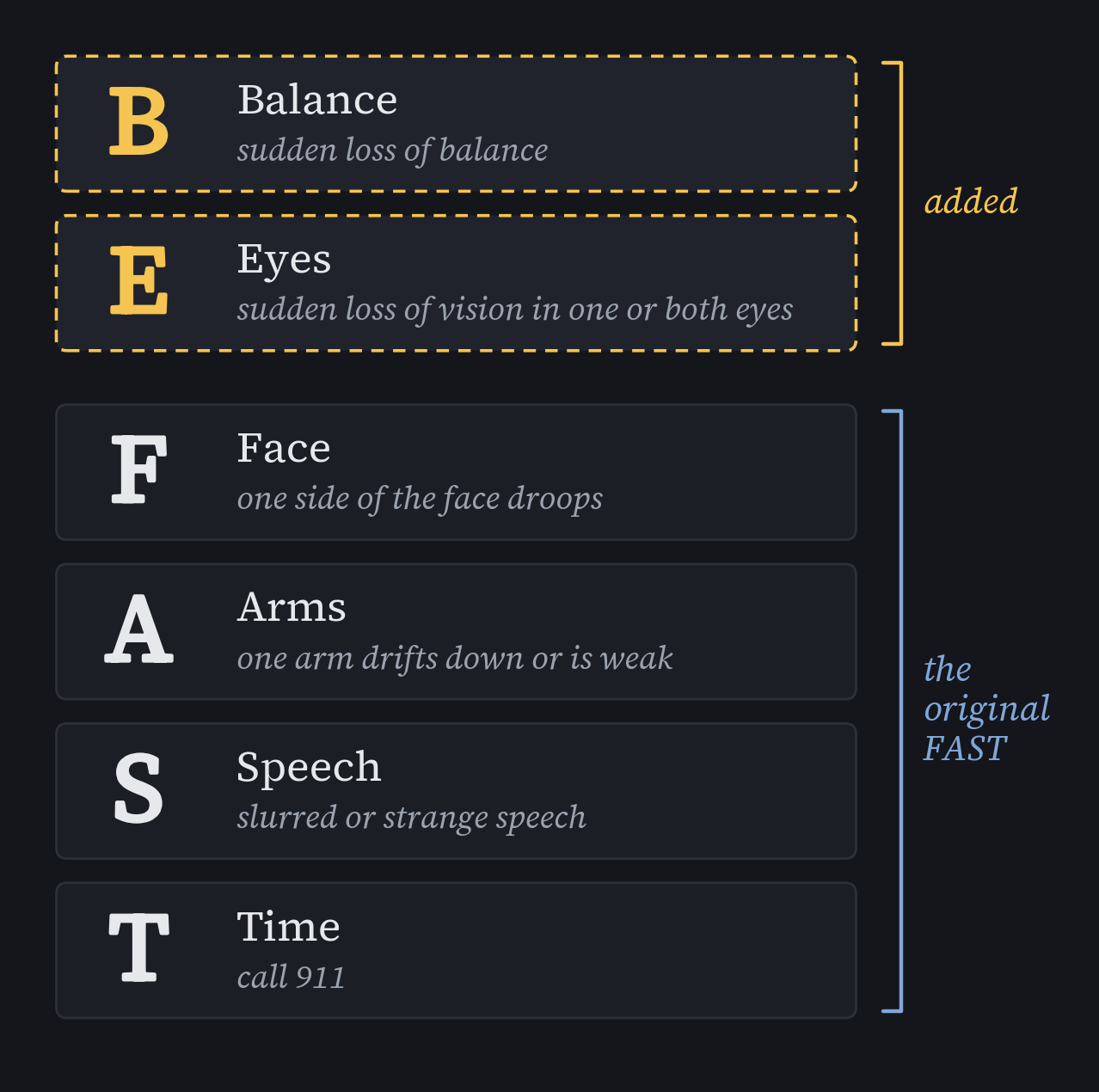
Figure 1. The stroke card, with the two letters added in 2017 set apart. Drawn for this piece, after Aroor, Singh and Goldstein (2017).
For moments like hers, stroke campaigns teach a short card called FAST, with four questions. Does one side of the Face droop? Does one Arm drift down? Is the Speech slurred or strange? If so, it is Time to call 911. Anyone in the room can ask those questions.
In 2017, three doctors at the University of Kentucky went back through the records of 736 patients treated there for a stroke caused by a clot. Of them, 14.1 percent had shown no FAST sign at all when they came in. Most of those had trouble with balance or with sight. With Balance and Eyes added, the card became BE-FAST, and the share it would have missed fell to 4.4 percent.
At Sunday dinner, a stroke that starts in the eyes could pass for tiredness. Across the table, a friend in her 40s reaches for her water glass and closes her hand on the air beside it. When she stands to clear the plates, she grips the back of her chair and says she is only tired. Her face does not droop, both arms rise, and her words come out right. By FAST’s four questions, she is fine. You hand her the glass and wait an hour to see if the tiredness passes. That is an hour before anyone calls 911.
A look that calls a friend fine leaves no record of how often looks are wrong. The Kentucky doctors could count FAST’s misses because it asks the same four questions of every person. Could a short card have saved that hour, and how would anyone know what a card misses? FAST was not the first card named by its letters. The first one most people ever got was filled in during their first minute of life.
When a Baby Arrives
In a New York delivery room in the early 1950s, a baby came out as the clock’s second hand swept. Sixty seconds later, the anesthesia resident, a doctor still in training standing by the mother’s head, gave the baby a score.
Was the heart beating faster than 100 a minute? Was the baby breathing? When a soft rubber tube went into its nose, did it grimace, sneeze or cough? Were its arms and legs bent, or limp? Was it pink all over? Each question got up to two points, and ten was the best a baby could get. Almost everyone reading this was scored this way (Figure 2), and almost no one remembers the number.
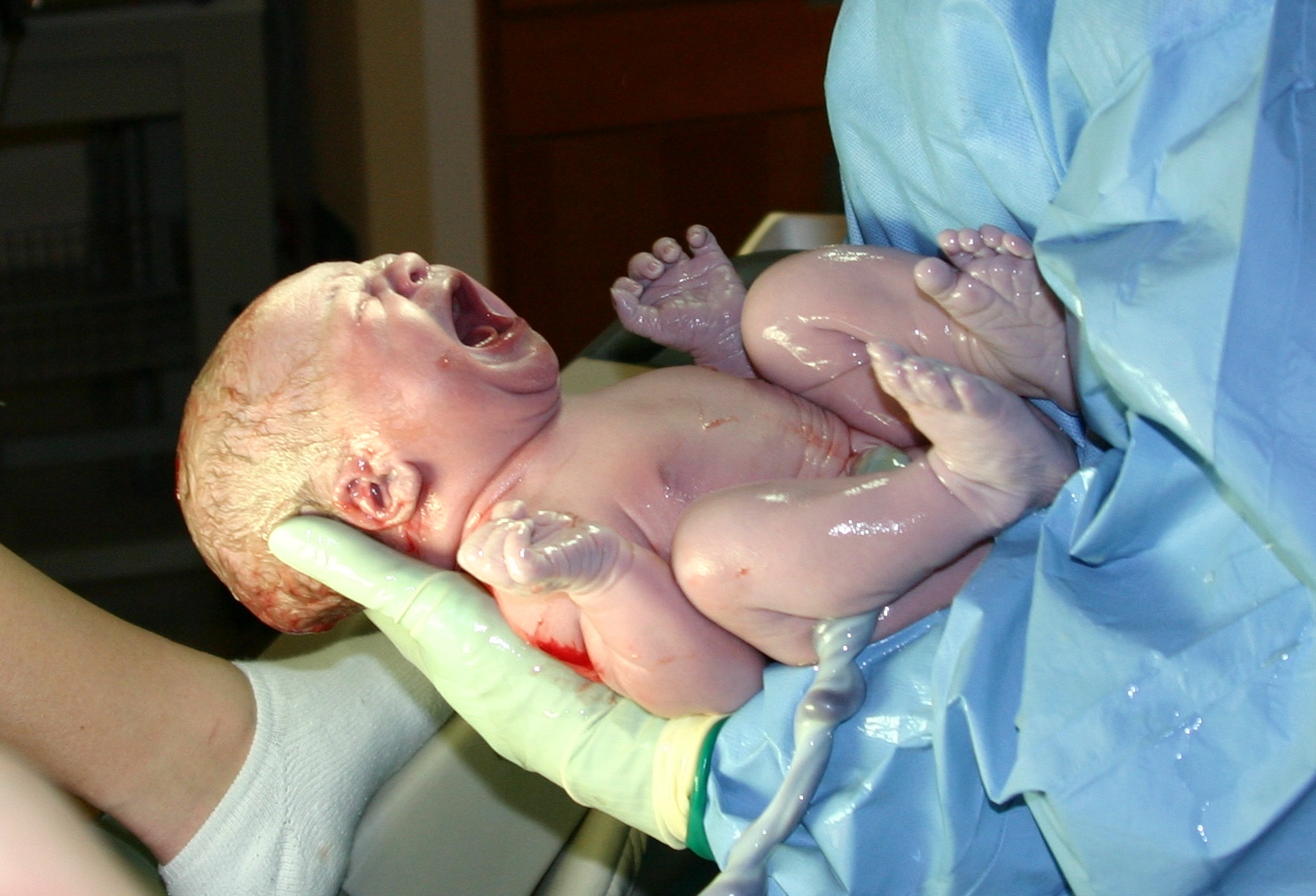
Figure 2. A newborn seconds after birth: crying, pink, arms and legs bent. Three of the five signs show at a glance. No one recorded her score. Photo by Ernest F (2006), CC BY-SA 3.0, via Wikimedia Commons.

The five questions look at a system, whose function is living on its own breath. In its first minute, a baby’s lungs fill with air and take over from the umbilical cord. The blood picks up oxygen in the lungs, and the heart pumps it out, so the skin turns pink and the muscles firm.
Each doctor in the room carried a mental model of that system, a set of guesses about which signs show a baby breathing on its own. Before 1953, each ran it in their own head and named the result “mild, moderate and severe depression.” Virginia Apgar, who taught the anesthesia residents at Columbia, wrote those words left “a fair margin for individual interpretation.” Two doctors could choose two words for one baby, and no one could add the words up.
Apgar wrote her model down. She listed every sign a newborn shows and kept five “which could be determined easily and without interfering with the care of the infant.” In 1962, two doctors reordered her rows so their first letters spelled her name: Appearance, Pulse, Grimace, Activity, Respiration (Figures 3 and 4).
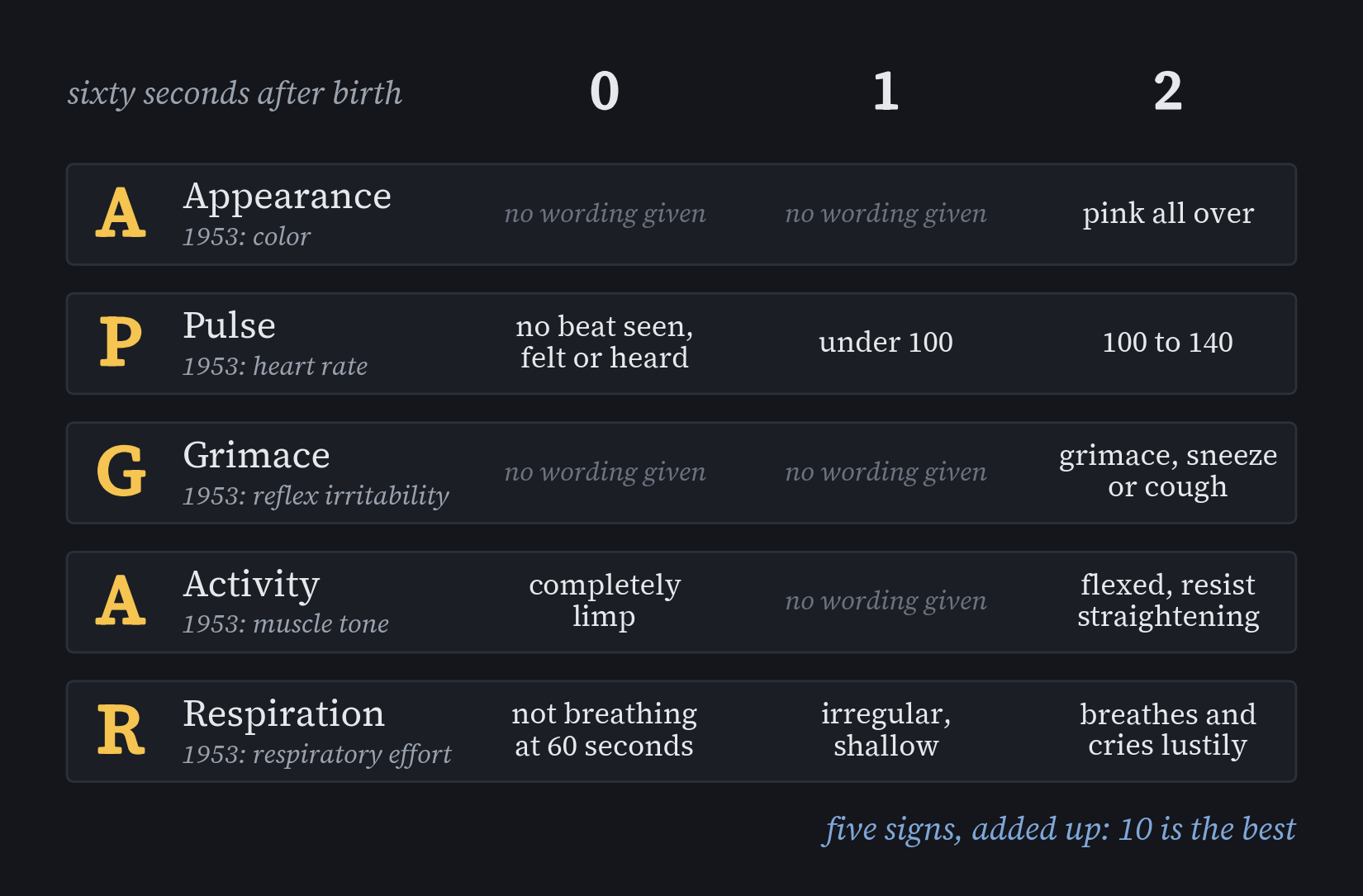
Figure 3. The five signs in the 1962 order, with Apgar’s 1953 names beneath and what earned a 0, 1 or 2, in her words. Where she described only some answers, the cell says so. Drawn for this piece, after Apgar (1953), pp. 261-262, and Butterfield and Covey (1962).
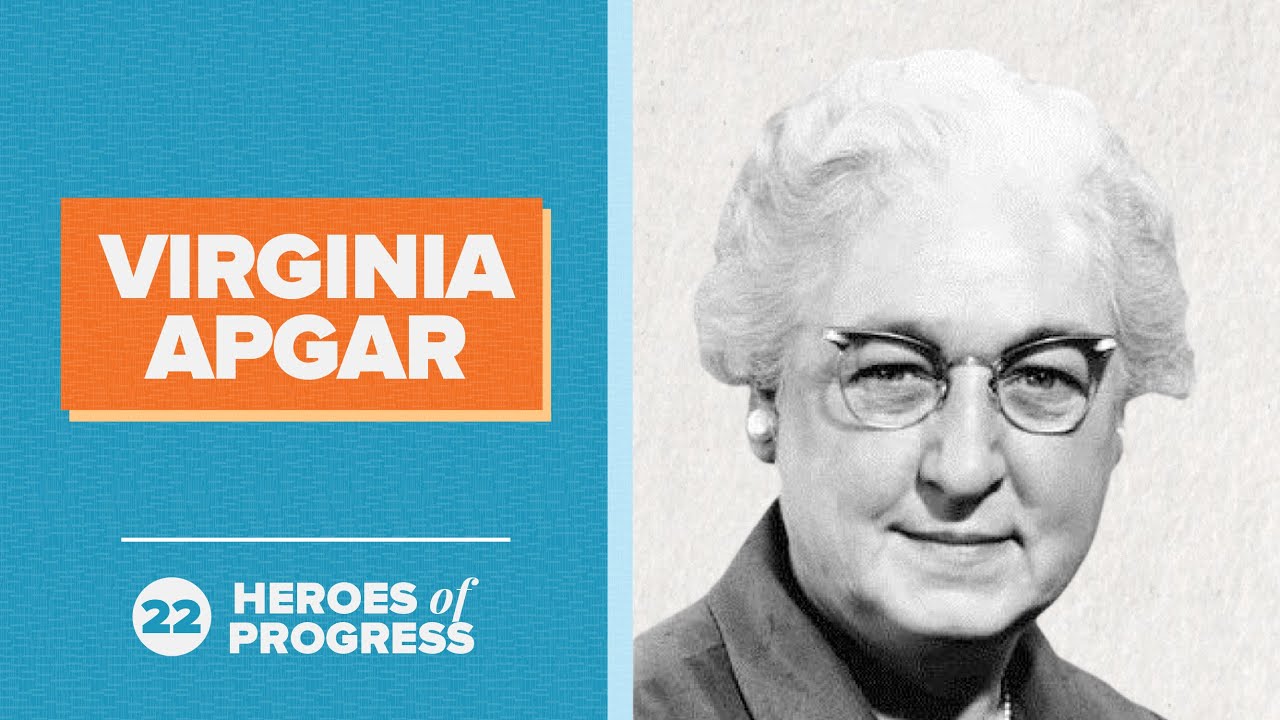
Figure 4. Virginia Apgar and the score that carries her name, from Human Progress (2021), YouTube embed.
The score sheet is a framework, which asks the model’s five questions at the same sixtieth second, scored the same way, for every baby. Of the many fields that use the word, the rulebook for drug trials uses it closest to Apgar’s sense.
“This framework enables proper trial planning that clearly distinguishes between the target of estimation (trial objective, estimand), the method of estimation (estimator), the numerical result (“estimate”), and a sensitivity analysis.”
Apgar’s card scores one baby, and ICH’s framework plans a trial of thousands. Both fix what will be measured “in advance,” before the first case.
At Sloane Hospital for Women, Apgar’s residents scored 1,021 babies this way, and the records showed which of them lived through their first month. The scores fell into three piles: low, middle and high (Figure 5). In the low pile, 14 percent died. In the high pile, 0.13 percent did.
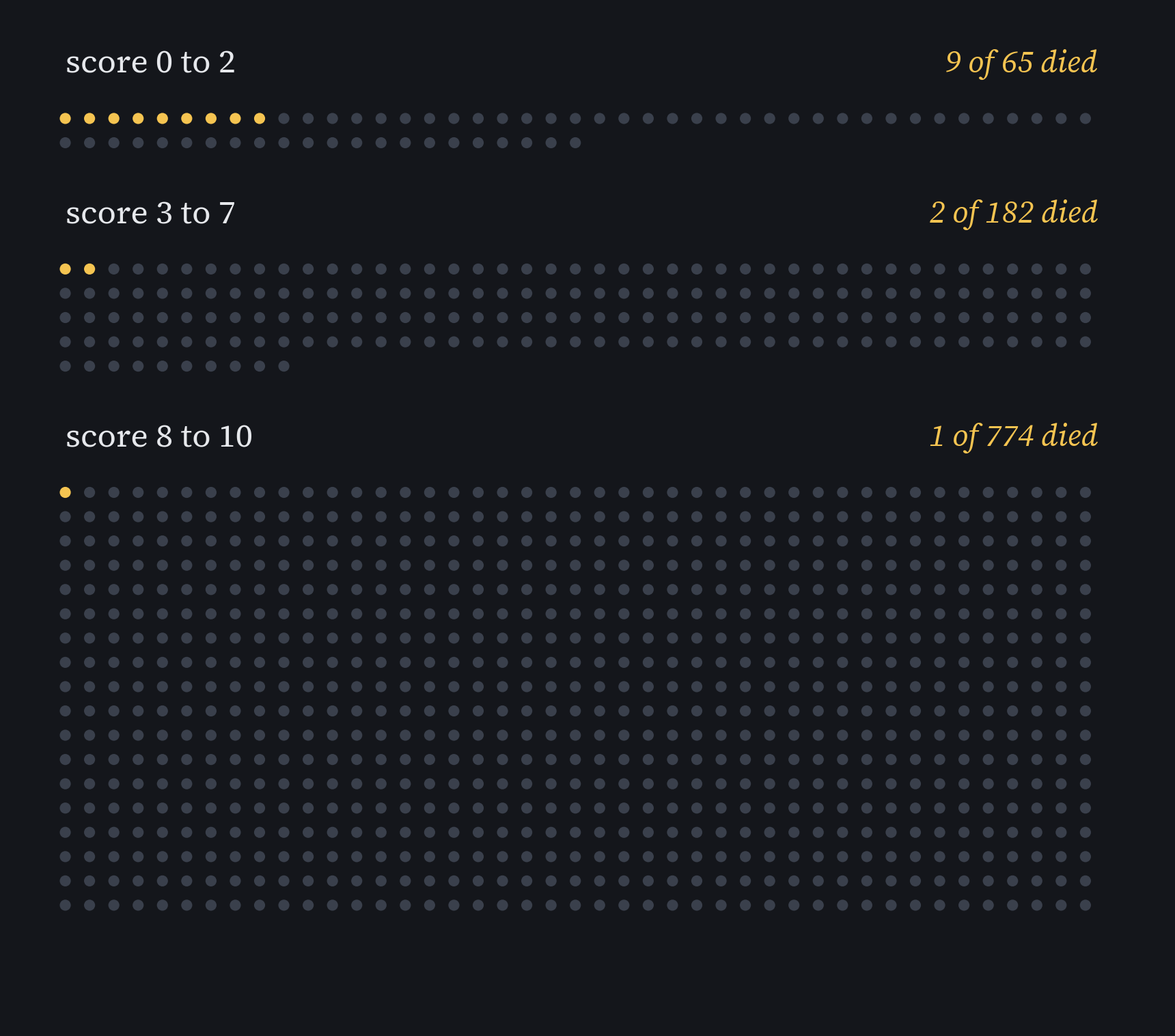
Figure 5. All 1,021 babies, one dot each, in three piles by their score at sixty seconds. The gold dots are the babies who died in their first month. Drawn for this piece from Apgar (1953), p. 267.
The low pile’s death rate was about a hundred times the high pile’s. Only 12 of the 1,021 babies died, too few to pin down the exact gap. A feeling about a baby cannot be checked against what happened next. A number given the same way every time can. What would the next card in a child’s life count?
When a Child Reads the Chart
Some years later, the same child stands at a line taped to a school floor, one hand over one eye. On the wall, rows of letters shrink toward the bottom.
The chart looks at a different system. The front of the eye bends light onto the back, a nerve carries the picture to the brain, and the brain reads it. The whole is for seeing. Herman Snellen, an eye doctor in Utrecht, wrote his model of a normal eye into a chart in 1862. Such an eye, he assumed, can just make out a stroke one-sixtieth of a degree wide. He built each letter on a five-by-five grid, each stroke one square, and sized each row so the strokes are that wide from the row’s distance.
The chart is the framework. Sight became a fraction. A child at 20/40 reads a row at 20 feet. A normal eye reads that row from 40. A child who cannot read yet points the way an E faces, or where a ring’s gap opens (Figure 6).
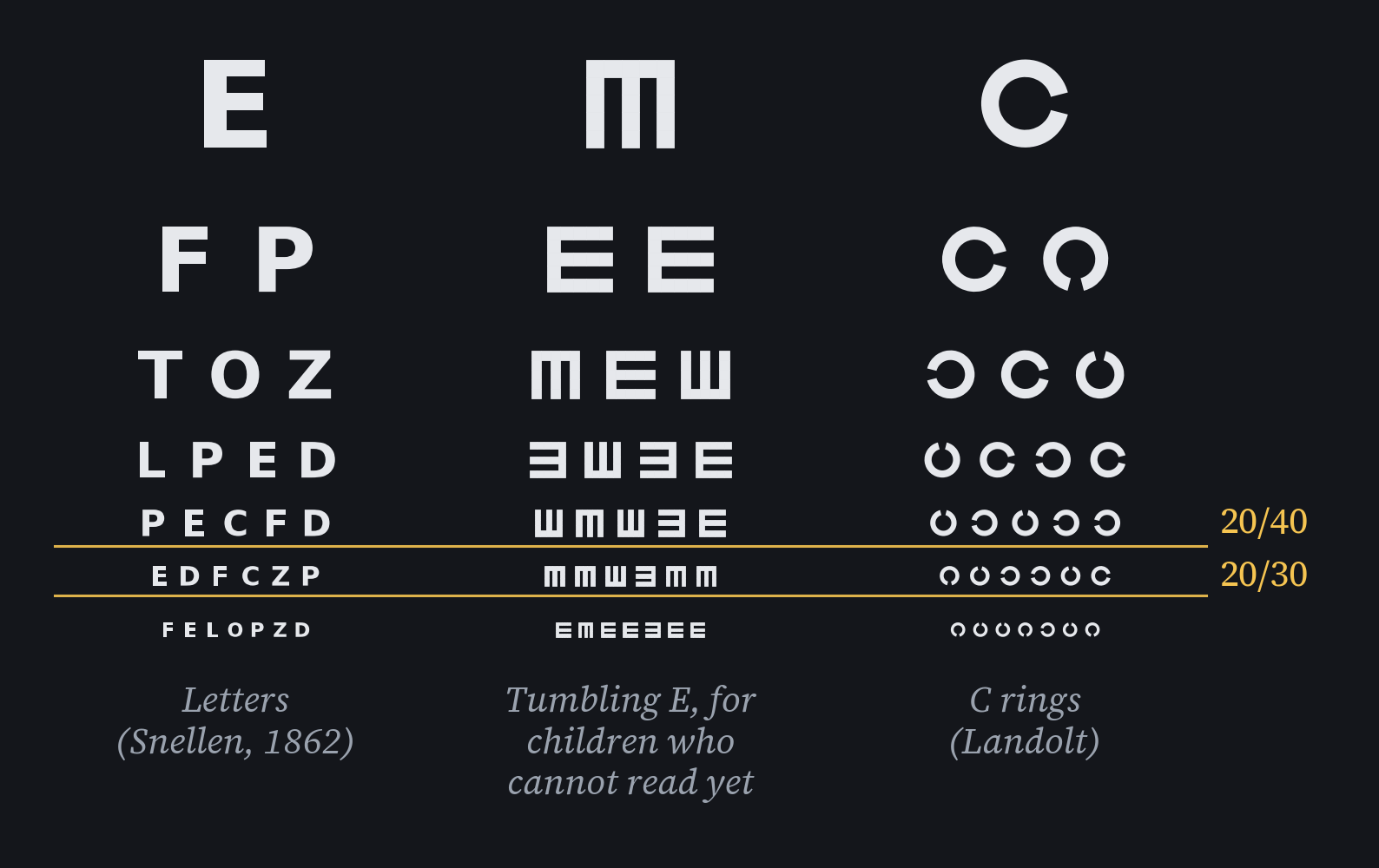
Figure 6. Three charts, one task: name the smallest row that can be read. The two marked rows show where a school’s line might fall. Schematic, not to scale. Drawn for this piece.
“A framework is a set of classes that embodies an abstract design for solutions to a family of related problems, and supports reuses at a larger granularity than classes.”
Johnson and Foote wrote software, whose frameworks are reused to build programs. Snellen’s is reused to measure, with the same rows from the same distance for every child.
The chart gives a score, not what it means. Someone has to draw a line: read this row, or see an eye doctor. Prevent Blindness, a national charity, draws it at 20/40 for children six and older. Missouri asks for 20/30 in each eye.
Where the line sits is a trade. Set it strict, and more children who see well are sent on for nothing. Set it loose, and more who need glasses go home without them. The chart cannot settle the trade, but because its rows and distance never change, the trade can be counted instead of left to whoever holds the pointer.
Snellen’s model is of an eye looking far, so the chart leaves things out. It finds the child who cannot see the board, and Missouri adds a near-vision test for the child who strains up close. The pediatricians’ own policy says screening “cannot be expected to detect all causes of amblyopia,” the lazy eye. A pass answers the chart’s questions. Which questions did the chart never ask?
When an Adult Fills In the Form
At a checkup, years after the eye chart, the front desk hands over a clipboard. One page asks, “Over the last 2 weeks, how often have you been bothered by any of the following problems?” Nine lines follow, from little interest or pleasure in doing things to trouble sleeping, poor appetite and thoughts of being better off dead. Each is scored from 0 for “Not at all” to 3 for “Nearly every day” (Figure 7).
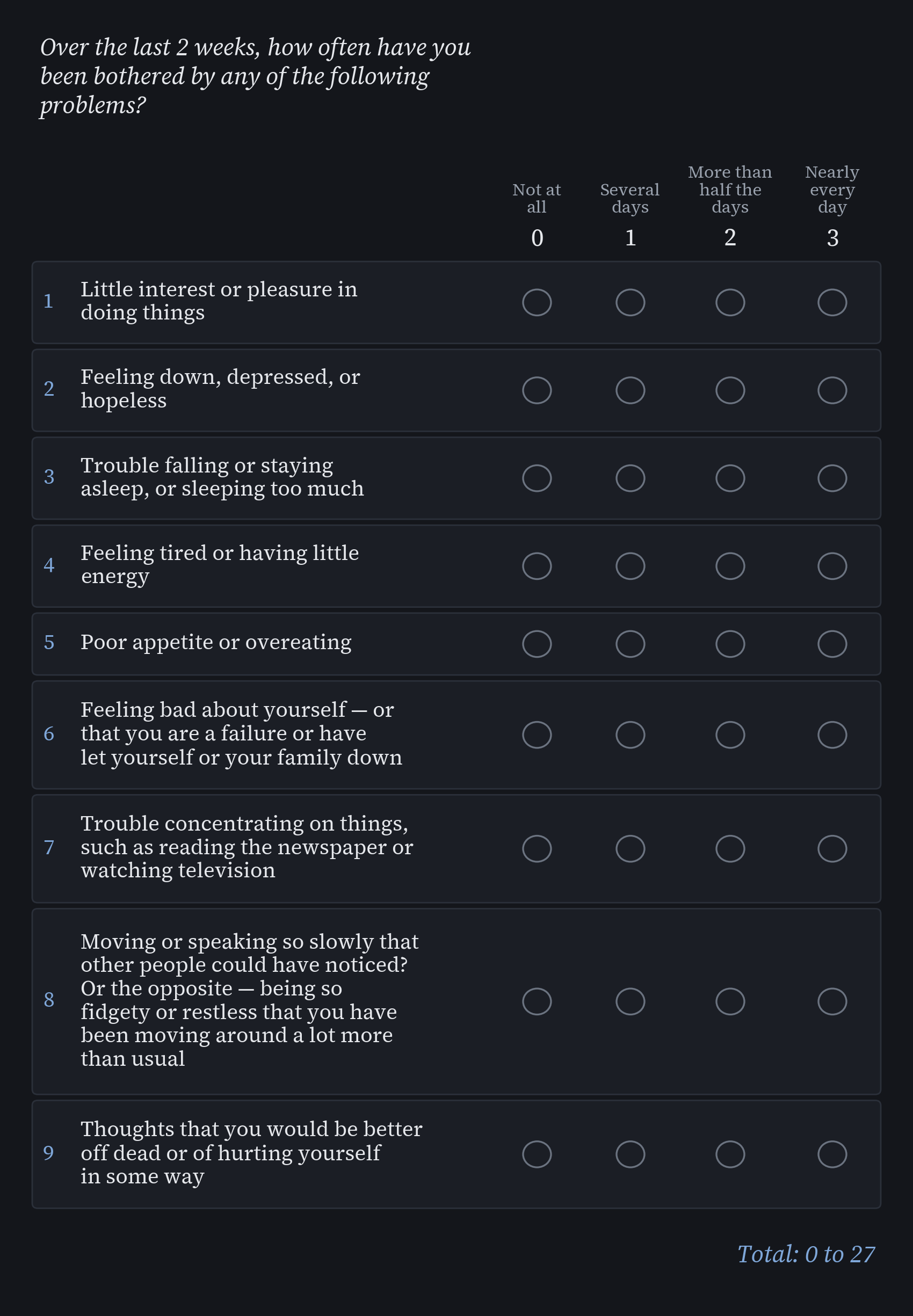
Figure 7. The PHQ-9, nine lines scored 0 to 3. Redrawn for this piece from the form by Spitzer, Williams, Kroenke and colleagues, which says “No permission required to reproduce, translate, display or distribute.”
This system has no organ to point at. Sleep, appetite, energy and mood push on one another: a week of short nights drains the day, and a drained day is harder to enjoy. Each line is a guess at what depression looks like from the inside, and together they write down a mental model of that system. The form is the framework.
“The structure of most frameworks is the identification of a set of concepts and their general relationships … that are loosely defined or unspecified.”
Partelow found “no universal definition of a framework,” and wrote that many skip the path “from concept to indicator to measurement.” The PHQ-9 spells it out: depression is the concept, the nine lines the indicators, 0 to 3 the measurement.
Kurt Kroenke, Robert Spitzer and Janet Williams reported it in 2001. They tested it in 15 clinics on 6,000 patients. A full interview with a mental health professional checked 580 of them. Of those the interview found to have major depression, 88 percent scored 10 or more. Of those it found without it, 88 percent scored under 10. The authors cut the totals into bands, from mild at 5 to severe at 20. “Mild” and “severe,” the words doctors once gave newborns by eye, now came with a number.
The model decides what the form leaves out, and the PHQ-9 leaves out the cause. It asks how often, never why: grief, a long illness or a new night shift can mark the boxes alike. The form is a screen by design, built to say who to ask more. A total of 12 is a number. What put it there is the clinician’s next question.
When an Elder Draws the Clock
Decades later, at a yearly wellness visit, a clinician asks an aging parent to remember three words: banana, sunrise, chair. Then the clinician asks for a clock with all the numbers on it and the hands at ten past eleven, and then for the three words again. That is the Mini-Cog, and it takes about three minutes. Each word remembered counts, and so does a clock drawn right (Figure 8).
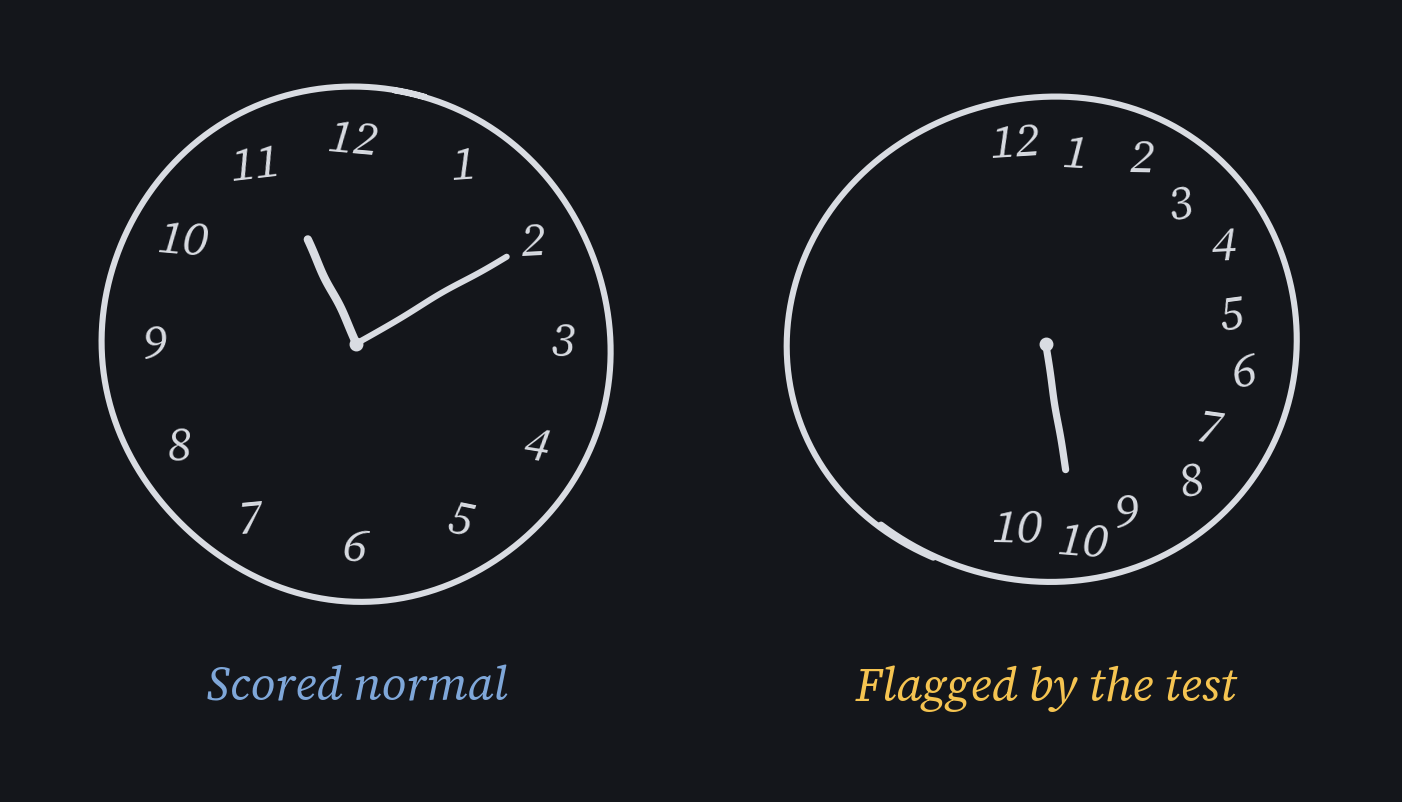
Figure 8. The clock task: one drawing the Mini-Cog scores as normal, one it flags. Drawn for this piece, not by patients.
The system here is the thinking brain. To draw the clock, it must recall what a clock looks like, plan where twelve numbers go around a circle, and turn “ten past eleven” into two hands. The three words test whether something new can be stored and found again a few minutes later. Medicare pays for the visit every year, and its rule asks only for “direct observation” of the patient’s thinking, with “due consideration” of what the patient and family report. That is a look: a model kept in one clinician’s head. The Mini-Cog writes its model down as two tasks and asks both the same way of every parent. The Alzheimer’s Association names it as one of three such cards.
How good is the card? Soo Borson and her colleagues first graded it in 2000. They tested 249 older adults chosen for the study, about half of them with dementia. The Mini-Cog caught 99 percent of those with dementia. In 2003, they graded it again, on a random sample of 1,119 older adults in the Monongahela Valley of western Pennsylvania. This time it caught 76 percent. The Mini-Mental State Exam, a longer test given to all 1,119, caught 79 percent.
Borson’s two studies can be laid side by side because the card did not change. The people had. In the first study, the people with dementia were picked because their diagnosis was clear. In a town, most elders are well, and the hard cases sit near the line. A framework is judged by its rate across all its cases, never by one, and the rate belongs to the cases as much as to the card. For a parent’s checkup, the second grade is the one to trust. On that grade, about one parent in four with dementia leaves the visit with a passing score, and the sibling who drove them there goes home relieved.
The three definitions do not agree on everything. But all three hold one part of the method the same from case to case: every trial, every program, every form.
Back at the Sunday table, the look that called the friend fine kept no count of when it was wrong. BE-FAST’s six letters take about a minute to learn before next Sunday’s dinner. The two added questions would have asked about the glass she missed and the chair she gripped, before the hour began.
A Closing Invitation. Like the stroke card, each card in this piece stood for questions asked the same way of every body. A glance keeps no record of what it missed. A card does.
- Catch the glance. Before you get up, say out loud the last call you made on a body by eye. A toddler’s forehead under your palm. A parent who sounded fine on Sunday’s call. Your own “only tired” at the sink. Which of those have you been wrong about, and how would you know?
- Trace the last pass. This week, find the last card you or someone you love passed: the vision letter in the school folder, the clipboard at the front desk, the three words and the clock at a parent’s visit. Where did its line sit, and what did it never ask? Who went home relieved?
- Write the five before the first. This month, before the next run of lookalikes, write five questions on an index card to ask every one, with whoever is choosing with you. Three apartments to view, two daycares to tour, a row of used cars. Afterward, which one did the glance call fine and the card did not?
Almost everyone reading this got the first card at sixty seconds and never saw the number. The number did not need remembering. The card asked every body the same five questions, so its misses could be counted.
Repeating yourself is how you stop repeating mistakes. A framework asks the same questions every time, so when it fails, it fails where you can see it.
Where This Came From
Apgar’s paper does not call her card a framework. She called it “grading,” a basis “for discussion and comparison of the results of obstetric practices,” so it was built to compare the care as much as the babies. Scoring a patient as “a sum total of several objective findings” was not new, she wrote. A 1938 government study by Lawrence Kolb and Clifton Himmelsbach had judged drug addiction treatment that way.
Johnson and Foote watched software frameworks grow up. A young framework, they wrote, makes its user know how each part works inside. A mature one becomes “black box” parts that “can be reused without knowing their implementations.” BE-FAST is one: asking it takes no neurology.
Intellectual Honesty Note. Chin’s words come from news reports of her Facebook post and her TODAY interview; the contact lens is TODAY’s paraphrase. The BE-FAST study looked back at one hospital’s records of clot strokes, and its authors call the revision worth testing, not proven. The hundredfold division, calling each card a framework, and BE-FAST a mature one, are this piece’s own. Apgar’s paper does not say why 712 other babies born alive in her seven and a half months went unscored. The 1962 letter is cited from its record, not read.
Two boxes are trimmed: ICH’s drops “see Glossary,” Partelow’s an aside on box-and-arrow diagrams. The PHQ-9’s 88 percent comes from one sample. Medicare does not name the Mini-Cog. The delivery room is retold from Apgar’s paper; the dinner, the school line, the clipboard, the parent and the sibling are invented. The 1938 study is cited through Apgar.
References
Aroor, S., Singh, R., & Goldstein, L. B. (2017). BE-FAST (Balance, Eyes, Face, Arm, Speech, Time): Reducing the proportion of strokes missed using the FAST mnemonic. Stroke, 48(2), 479–481. https://doi.org/10.1161/STROKEAHA.116.015169
Apgar, V. (1953). A proposal for a new method of evaluation of the newborn infant. Current Researches in Anesthesia and Analgesia, 32, 260–267.
Borson, S., Scanlan, J., Brush, M., Vitaliano, P., & Dokmak, A. (2000). The Mini-Cog: A cognitive “vital signs” measure for dementia screening in multi-lingual elderly. International Journal of Geriatric Psychiatry, 15(11), 1021–1027. https://doi.org/10.1002/1099-1166(200011)15:11<1021::AID-GPS234>3.0.CO;2-6
Borson, S., Scanlan, J. M., Chen, P., & Ganguli, M. (2003). The Mini-Cog as a screen for dementia: Validation in a population-based sample. Journal of the American Geriatrics Society, 51(10), 1451–1454. https://doi.org/10.1046/j.1532-5415.2003.51465.x
Butterfield, J., & Covey, M. J. (1962). Practical epigram of the Apgar score [Letter]. JAMA, 181(4), 353.
Cordell, C. B., Borson, S., Boustani, M., Chodosh, J., Reuben, D., Verghese, J., Thies, W., Fried, L. B., & Medicare Detection of Cognitive Impairment Workgroup. (2013). Alzheimer’s Association recommendations for operationalizing the detection of cognitive impairment during the Medicare Annual Wellness Visit in a primary care setting. Alzheimer’s & Dementia, 9(2), 141–150. https://doi.org/10.1016/j.jalz.2012.09.011
Donahue, S. P., Nixon, C. N., & Committee on Practice and Ambulatory Medicine, Section on Ophthalmology, American Academy of Pediatrics. (2016). Visual system assessment in infants, children, and young adults by pediatricians. Pediatrics, 137(1), 28–30. https://doi.org/10.1542/peds.2015-3596
Human Progress. (2021, April 26). Virginia Apgar: The Apgar score | Heroes of Progress | Ep. 22 [Video]. YouTube. https://www.youtube.com/watch?v=7ZgaMHrllis
ICH. (2019). ICH E9 (R1) addendum on estimands and sensitivity analysis in clinical trials to the guideline on statistical principles for clinical trials (EMA/CHMP/ICH/436221/2017). European Medicines Agency. https://www.ema.europa.eu/documents/scientific-guideline/ich-e9-r1-addendum-estimands-sensitivity-analysis-clinical-trials-guideline-statistical-principles_en.pdf
Johnson, R. E., & Foote, B. (1988). Designing reusable classes. Journal of Object-Oriented Programming, 1(2), 22–35. https://www.laputan.org/drc.html
Kolb, L., & Himmelsbach, C. K. (1938). Clinical studies of drug addiction III. Public Health Reports, Supplement 128, 23–31. (Cited in Apgar, 1953.)
Kroenke, K., Spitzer, R. L., & Williams, J. B. W. (2001). The PHQ-9: Validity of a brief depression severity measure. Journal of General Internal Medicine, 16(9), 606–613. https://doi.org/10.1046/j.1525-1497.2001.016009606.x
Medicare Program; Annual Wellness Visit, 42 C.F.R. § 410.15. https://www.law.cornell.edu/cfr/text/42/410.15
Missouri Department of Health and Senior Services. (n.d.). Vision screening training. https://health.mo.gov/living/families/schoolhealth/pdf/VisionScreeningTraining.pdf
NBC News. (2022, September 6). Oklahoma news anchor has the ‘beginnings of a stroke’ on live TV. https://www.nbcnews.com/news/amp/rcna46387
Partelow, S. (2023). What is a framework? Understanding their purpose, value, development and use. Journal of Environmental Studies and Sciences, 13, 510–519. https://doi.org/10.1007/s13412-023-00833-w
Prevent Blindness. (n.d.). Children’s vision screening program: Referral letter. https://preventblindness.org/wp-content/uploads/2013/08/PBNC-Vision-Screening-Referral-Letter.doc
Snellen, H. (1862). Optotypi ad visum determinandum. P. W. van de Weijer.
Spitzer, R. L., Williams, J. B. W., Kroenke, K., & colleagues. (n.d.). Patient Health Questionnaire-9 (PHQ-9) [Form]. Pfizer. https://www.dphhs.mt.gov/assets/suicideprevention/phqquestions.pdf
TODAY. (2022, September 7). News anchor speaks out on TODAY after suffering ‘beginnings of a stroke’ on TV. https://www.today.com/today/amp/rcna46589