In March 1960, the Royal Air Force dropped cats out of a plane over Borneo. They came down in wicker baskets, hung from parachutes (Figure 1).
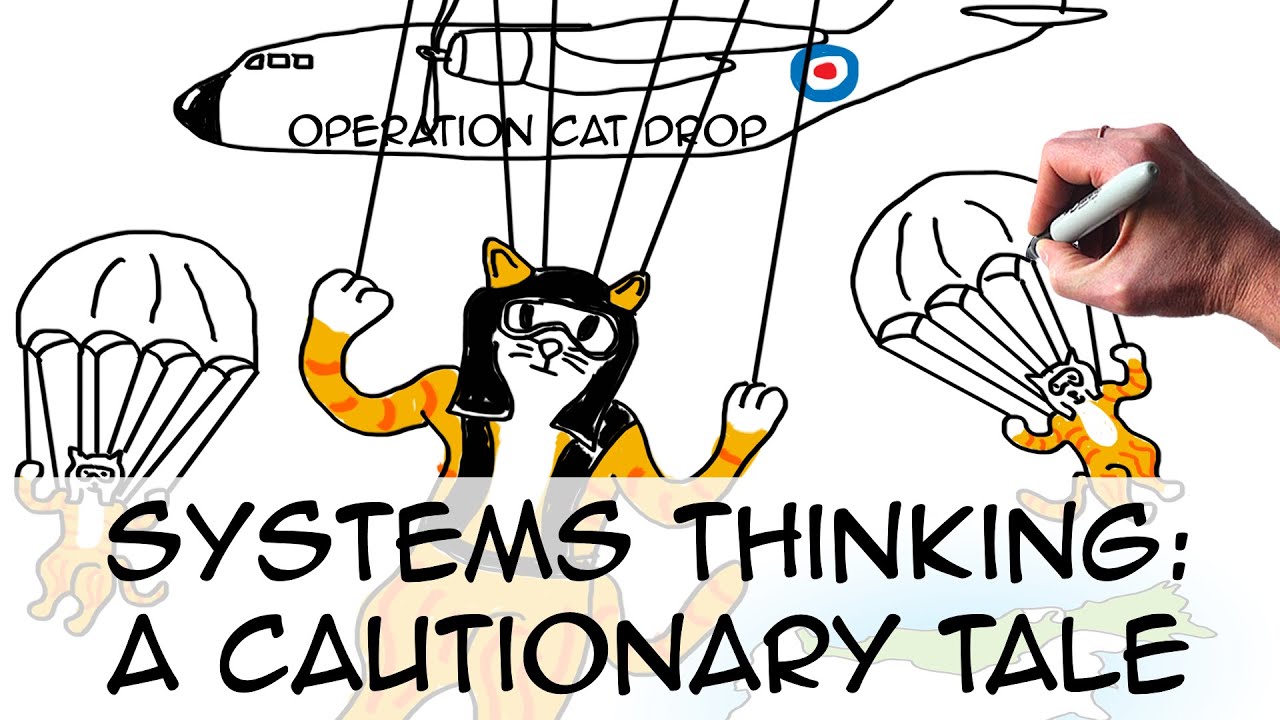
Figure 1. Operation Cat Drop as it is usually retold, from Sustainability Illustrated (2014), YouTube embed.
The cats came from Kuching, the capital of Sarawak. The city’s name is often said to mean “cat.” Kuching had been asked for thirty cats and could find twenty-three. Later retellings grew the number to fourteen thousand. The cats were bound for Bario, a village high in the Kelabit Highlands, where rats were eating the rice. Hundreds of villagers watched the baskets come down into the rice fields. A month later, the village sent a message back to Kuching: “Thanks for the cats – no more trouble with rats and mice.”
The message did not say why the rats had come. They were the last link in a chain that started with a good idea. In the early 1950s, malaria teams sprayed DDT and other insecticides on the walls of the longhouses, the long shared houses where families slept. The spray killed the mosquitoes that carried malaria. It also killed tiny wasps. The wasps laid their eggs inside caterpillars, and that kept the caterpillars from multiplying. The caterpillars lived in the thatch, the dried leaves that made the roofs. The caterpillars could sense the chemical and stayed away from it. The wasps could not, and they died. With the wasps gone, the caterpillars ate the roofs. The village cats died too, and the spray was blamed. With the cats gone, the rats came in.
The villagers complained that the spray was ruining their roofs. It took a team from the World Health Organization to trace the ruined roofs back to a wasp small enough to miss.
Cities have their own version of the spray. Houston spent $2.8 billion widening the Katy Freeway to more than twenty lanes, to end its traffic jams. The new lanes did ease the jam at first. Then the wider road drew more drivers. Between 2011 and 2014, the rush-hour drive along it got 30 percent longer in the morning and 55 percent longer in the afternoon. Across American cities, economists have found that driving grows in step with new lanes.
A cheaper house farther out lowers your mortgage, and it works. It also adds an hour to your drive, each way. Someone else takes over the school drop-off. Dinner moves later, then apart, one plate kept warm in the oven. On a Friday, a friend texts about drinks. You read it in traffic, brake lights red for a mile ahead, forty minutes from home. Behind you, a driver honks, long and flat. You text back no. After a few months, the texts stop coming.
In Sarawak, too, the spray worked: it was a correct answer to a question about one part. The malaria teams asked how to stop the mosquito. A better question was what else the insecticide would kill. For the cheaper house, the hour each way has already cost the Friday drinks, so what else will the house cost? That question splits into three, each worth asking before the next fix. What else is connected to this part? What does it keep in check? Who decided what counts, and what did they leave out? A fix lands in a system first. The three questions then follow the fix: what it touches, what it switches off, and what it leaves off the map.
What a Fix Lands In
Before a concert, one oboe plays a single note, an A, and the rest of the orchestra tunes to it. If the oboe is a little sharp, every player ends up a little sharp. A fix lands among parts tied together like that. People have tried to define a system for about ninety years.
“A system can be defined as a complex of interacting elements.”
Bertalanffy was a biologist. He wanted one language for a cell, an animal, and a society. His next sentence says what “interacting” means: each part behaves differently depending on what it is connected to. If the parts behave the same no matter what, “the elements behave independently,” and there is no system. Take a violinist. Alone, a violinist can play at any speed. In an orchestra, the same violinist listens and keeps pace with everyone else.
“A system is an interconnected set of elements that is coherently organized in a way that achieves something.”
Meadows split her definition into three things to look for (Figure 2). The elements are the things in the system: in an orchestra, the players and their instruments. The interconnections are how they affect each other: the score, the conductor, the players listening to each other. The function, or purpose, is what the whole does: music for the people in the seats.
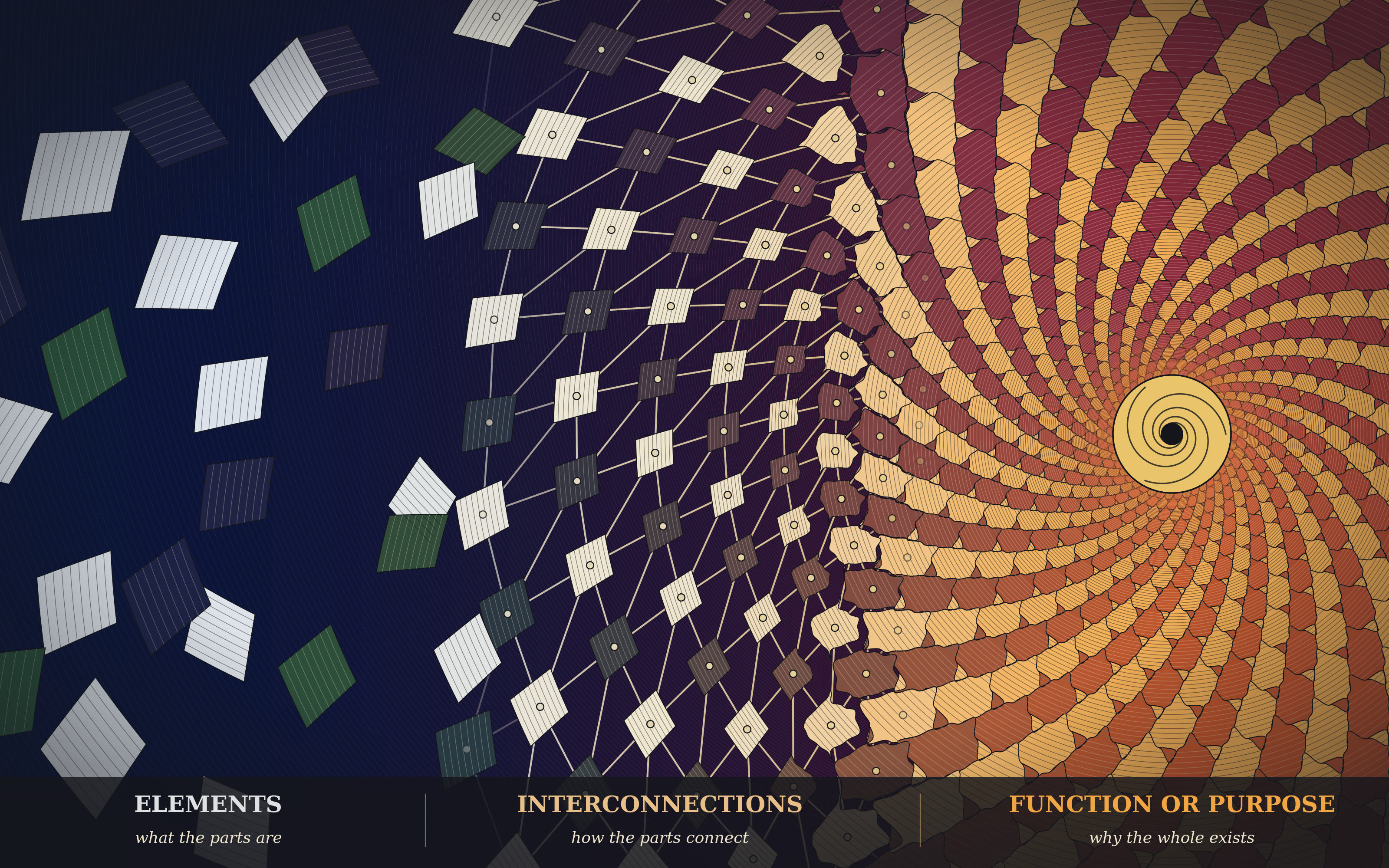
Figure 2. The three things Meadows says to look for in a system: elements, interconnections, and function or purpose.
Meadows also ranked the three. The elements matter least. Replace every player on a football team, and it is still a football team. The interconnections matter more. Change the rules to basketball’s, and it is a new game (p. 16). The purpose matters most. She called it “often the most crucial determinant of the system’s behavior” (p. 17). To find it, watch what the system does: “Purposes are deduced from behavior, not from rhetoric or stated goals” (p. 14). An orchestra may say its purpose is great music. If it plays the same safe pieces every season because they sell tickets, its behavior says the purpose is selling tickets.
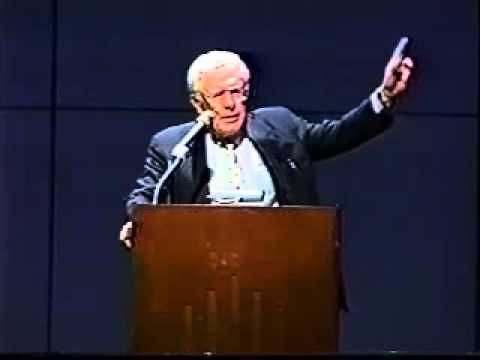
Ackoff reached that sentence in three steps. A system has two or more parts. Each part can change how the whole behaves, but never alone. What one part does depends on at least one other part. Take one coworker off a team of five, and every job left on the team shifts. Ackoff’s word for what Meadows calls purpose is the “essential property”: something the whole can do that no part can do alone. An orchestra’s essential property is the symphony. Send each player to a separate room, and each one can still play a part, but no one can play the symphony.
“Systems thinking is a discipline for seeing wholes. It is a framework for seeing interrelationships rather than things, for seeing patterns of change rather than static ‘snapshots.’”
For Senge, systems thinking is a skill: the habit of asking what else a change touches, and when. A snapshot of a concert catches one chord. The music is the pattern of chords over time (Figure 3).
Senge also listed laws for what happens without that habit. The first is “Today’s problems come from yesterday’s ‘solutions.’” Another is “Cause and effect are not closely related in time and space.” Houston’s wider freeway fits both.

Figure 3. A snapshot with the shutter left open. A long exposure of the Marsha Sharp Freeway in Lubbock, Texas, turns one moment of traffic into its pattern over time: headlights in white, taillights in red. Photograph by Ihavenoidea49 (2024), Wikimedia Commons, CC0.
“System is defined as part co-implying whole.”
Co-implying means each needs the other. Nothing is a part unless it belongs to a whole. Nothing is a whole unless it has parts. Take the violinist again. Is the violinist part of the orchestra, the string section, or a quartet that plays weddings on weekends? Each whole makes the violinist a different part. Who decides which whole counts?
What a Fix Touches
A truck spills sand across a road, and the sand counts as a pile, not a system. All five definitions would call the orchestra one. They agree on four points, though not every definition makes every point.
-
A system is not a pile. Meadows’ example is the sand: add some or take some away, and it is still sand on a road (p. 12). In a pile, the parts act independently.
-
A system is held together by its connections. Bertalanffy says “interacting,” Meadows “interconnected,” and Senge “interrelationships rather than things.”
-
A system changes over time. Meadows writes that systems produce “their own pattern of behavior over time” (p. 2). The pattern comes from inside: the parts acting on each other, day after day.
-
A system is for something. Meadows’ system “achieves something.” The malaria program was for killing mosquitoes. The longhouse was for a dry, safe place to sleep.
Some cholesterol pills are a fix with a hidden connection, and with grapefruit juice they show all four points. The pill and the juice are not a pile: together, they do something neither does alone. They are held together by an enzyme in the gut that normally breaks the drug down. Grapefruit juice blocks it. A statistician has a name for this: an interaction effect. Two things interact when the effect of one depends on the level of the other. Here, the pill’s effect depends on how much juice someone drinks.
The change also builds over time. The juice disables the enzyme, and the gut has to make new enzyme to replace it. A day after one glass, a quarter of the effect is still there. In one study, three glasses a day for a week doubled the effect on a blood pressure drug. Too much of the cholesterol drug stays in the body.
The pair, judged by what it does, is no longer just a cholesterol treatment. It also raises the risk of liver and muscle damage.
The pair answers the first question from the opening. What else is connected to this part? For the cholesterol pill, the answer is a glass of juice. But which glass: the one poured this morning, or the one from yesterday?
What a Fix Switches Off
Yesterday’s glass of juice is still at work today. A credit card has a delay too: the spending happens now, and the bill that pushes back on it comes weeks later. Meadows calls it feedback when a change comes back around to push on itself.
“A negative feedback loop is self-correcting; a positive feedback loop is self-reinforcing.”
In Thinking in Systems, Meadows calls the positive kind reinforcing and the negative kind balancing, and one credit card shows both. A reinforcing loop feeds itself. Meadows calls this kind “amplifying, reinforcing, self-multiplying, snowballing” (p. 30). On the card, the snowball is interest charged on last month’s interest. A balancing loop pulls a system back toward where it was. The monthly statement arrives with the balance in bold at the top, and the cardholder cuts back. Meadows calls balancing loops “both sources of stability and sources of resistance to change” (p. 30). The statement that keeps the debt steady also pushes back on any month of extra spending.
The card’s delay is a few weeks. In Sarawak, the rats took years to come. Someone who opens a frightening bill cuts spending too hard, then splurges when the next bill looks fine, so the delayed balancing loop overshoots and swings back.
The card answers the second question from the opening. What does this part keep in check? The answer is usually a balancing loop. Balancing loops are the easiest part of a system to miss, because when they work, nothing happens. Going paperless is a fix too. Swap the paper statement for an app nobody opens for three months, and the interest keeps growing with no balancing loop to stop it. Opening the app once this week brings the loop back.
In Sarawak, every link the spray broke was a balancing loop. Without the wasps, nothing held the caterpillars back, and the roofs sagged. Without the cats, nothing held the rats back, and they reached the rice. The twenty-three cats in wicker baskets were a balancing loop, flown back in by hand. What else did the malaria program not count?
What a Fix Leaves Off the Map
The malaria program counted mosquitoes. It did not count wasps, roofs, or cats. Even now, no one is sure how the cats died. One account, Tom Harrisson’s, has them eating cockroaches the DDT had killed; others have them licking it off their paws.
For Bertalanffy, a system is out in the world, whether or not anyone maps it. For many of the thinkers after him, a system is also like a map: someone draws it, and that person decides where it ends. At home, the heat can be drawn as a furnace, a thermostat and the walls. Whether the hand that sets the dial goes on the map is up to whoever draws it. Meadows wrote that “boundaries are of our own making” (p. 99; Figure 4). Sarawak shows both: the wasps were real, but whether they got counted was up to the people drawing the map.

Figure 4. Boundaries of our own making. A tulip field in the Netherlands in April, red on one side of the path and purple on the other. The tulips did not choose the line; a grower drew it. Photograph by Tomasz Baranowski (2018), Wikimedia Commons, CC BY 2.0.
No program can count every insect in Borneo, so something always gets left off. The people who live with what was left off tend to notice first: in Sarawak, the villagers. That is the third question from the opening. Who decided what counts, and what did they leave out?
None of the three questions says to skip the fix. Houston may still have needed its lanes. The cheaper house may still be the right one, for the reader or for a friend about to sign the papers on one. The questions add one step before each fix, asked the same way every time. For the lanes, the step is asking who will move in along the new road. For the house, it is counting the hour each way in the car, and the Friday drinks it will cost.
A Closing Invitation. Every fix in this piece worked the way the spray did. It solved the problem it was aimed at. Its cost came later, and somewhere else. The three questions work on your own fixes too.
- Notice the sag. Find the fix at home that worked and cost you the most. The cheaper car that kept breaking down. The rule that ended one fight and started a quieter one. The cost could sound like a knock from the engine on cold mornings, or a door shut a little harder. How long before you noticed?
- Find the wasp. Name one thing, at work or at home, that the old way kept in check without anyone noticing. The coworker who caught mistakes, until the day they left. The weekly call with a friend that kept small worries small. Could one call this week bring back your friend’s laugh, the way the cats were flown in?
- Walk to the roof before the next spray. Take the decision in front of you now: a job offer, a lease to renew, a trip planned for spring. Who will live with its cost a year from now, somewhere you are not looking? Ask that person, a partner or a roommate, before you decide.
Putting back what the old way kept in check is a small cat drop. Over Bario in 1960, hundreds of villagers watched twenty-three cats come down in baskets under parachutes, sent to answer the question about the spray, years late.
Sometimes today’s problems are yesterday’s solutions. A fix can solve the problem it was aimed at. Its cost comes later, and somewhere else.
Where This Came From
Each of the five definitions of a system comes from one of four waves of systems thinking (Figure 5), and each wave would have asked something different about the spray. The first wave, from the 1950s, wanted to predict and steer. It brought Bertalanffy’s general system theory, Norbert Wiener’s cybernetics, and Jay Forrester’s system dynamics, the field Meadows and Senge came from. A first-wave team would have modeled the fix: so many cats per rat, so many wasps per caterpillar. The second wave, Ackoff’s, from the 1970s, began when people inside a system wanted different things from it. A second-wave team would have asked whose village the fix was for. The third wave, from the 1980s, asked the third question: who decided what counts, and what was left off the map. A third-wave team would have started with the families under the thatch. The fourth wave, proposed in 2021 by the Cabreras and Gerald Midgley, is still unsettled.
Figure 5. The four waves of systems thinking, after Cabrera, Cabrera and Midgley (2021).
Intellectual Honesty Note. Four readings are this piece’s own. Two are about Sarawak: the malaria teams asking how to stop the mosquito, and the story as broken balancing loops. The other two are the malaria program and the longhouse as two purposes, and the grapefruit pair as an interaction effect. The cheaper house is a hypothetical. The fourteen thousand cats of later retellings do not appear in the 1960 press. The video in Figure 1 tells the popular version, which dates the cat drop to the 1950s and adds plague; this piece follows the 1960 record. Senge’s page number comes from later citations. The wave dates are approximate, and the 2021 chapter went unchecked.
References
Ackoff, R. L. (2015, November 2). Systems thinking speech by Dr. Russell Ackoff [Video]. YouTube. https://www.youtube.com/watch?v=EbLh7rZ3rhU
Bailey, D. G., Dresser, G., & Arnold, J. M. O. (2013). Grapefruit–medication interactions: Forbidden fruit or avoidable consequences? CMAJ, 185(4), 309–316. https://doi.org/10.1503/cmaj.120951
Baranowski, T. (2018). Red and purple tulips [Photograph]. Wikimedia Commons. https://commons.wikimedia.org/wiki/File:Red_and_purple_tullips_-_Flickr_-_tomaszbaranowski007.jpg. CC BY 2.0.

Bertalanffy, L. von. (1968). General System Theory: Foundations, Development, Applications. George Braziller.
Cabrera, D., & Cabrera, L. (2022). DSRP theory: A primer. Systems, 10(2), 26. https://doi.org/10.3390/systems10020026
Cabrera, D., Cabrera, L., & Midgley, G. (2021). The four waves of systems thinking. In D. Cabrera, L. Cabrera, & G. Midgley (Eds.), The Routledge Handbook for Systems Thinking. Routledge.
Cortright, J. (2015, December 16). Reducing congestion: Katy didn’t. City Observatory. https://cityobservatory.org/reducing-congestion-katy-didnt/
Duranton, G., & Turner, M. A. (2011). The fundamental law of road congestion: Evidence from US cities. American Economic Review, 101(6), 2616–2652.
Food and Drug Administration. (2021, July 1). Grapefruit juice and some drugs don’t mix [Consumer update]. https://www.fda.gov/consumers/consumer-updates/grapefruit-juice-and-some-drugs-dont-mix
Forrester, J. W. (1961). Industrial Dynamics. MIT Press.
Ho, S. S. (2024, April 1). It’s a cat’s life: Airborne felines fight in war against rats. BiblioAsia. National Library Board, Singapore. https://biblioasia.nlb.gov.sg/history/2024/4/cats-rats-parachute-malaya/
Ihavenoidea49. (2024). Marsha Sharp Freeway light trails [Photograph]. Wikimedia Commons. https://commons.wikimedia.org/wiki/File:Marsha_Sharp_Freeway_Light_Trails.jpg. CC0.

Magnin, A. (2014, May 6). Systems thinking: A cautionary tale (cats in Borneo) [Video]. Sustainability Illustrated. YouTube. https://www.youtube.com/watch?v=17BP9n6g1F0
Meadows, D. H. (1999). Leverage points: Places to intervene in a system. The Sustainability Institute. https://donellameadows.org/archives/leverage-points-places-to-intervene-in-a-system/
Meadows, D. H. (2008). Thinking in Systems: A Primer (D. Wright, Ed.). Chelsea Green.
O’Shaughnessy, P. T. (2008). Parachuting cats and crushed eggs: The controversy over the use of DDT to control malaria. American Journal of Public Health, 98(11), 1940–1948.
Senge, P. M. (1990). The Fifth Discipline: The Art and Practice of the Learning Organization. Doubleday.
Wiener, N. (1948). Cybernetics: Or Control and Communication in the Animal and the Machine. MIT Press.